Early Life
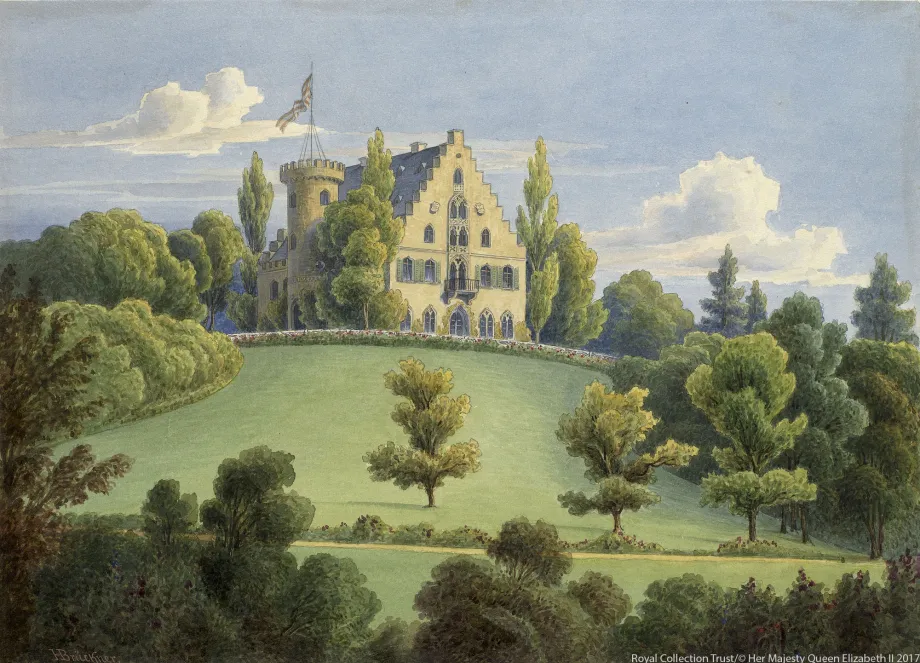
Prince Albert (full name Prince Franz August Karl Albert Emanuel) was born on the 26 August 1819, the younger son of Ernest I, Duke of Saxe-Coburg-Saalfeld (later Saxe-Coburg-Gotha) and Duchess Louise of Saxe-Coburg-Altenburg. He spent his childhood at Schloss Rosenau, his family's country home near Coburg, and at the ducal palaces in Coburg and Gotha.
Prince Albert received a broad education, both from Florschütz and at the University of Bonn, which he attended in 1837 and 1838. He showed considerable aptitude in the natural sciences, languages, art and music, and was to become an accomplished organist, singer and composer, as well as an amateur painter.
In 1838-9 he made a tour of Italy, gaining an appreciation of its treasures of art and architecture and visiting artists' studios, while also studying music and taking singing lessons.
Marriage and Family Life
Prince Albert's uncle, Prince Leopold, who became King of the Belgians in 1831, hoped that the Prince would marry his cousin, Princess Victoria, heir presumptive to the British throne, and he arranged the cousins' first meeting, on 18 May 1836 in England.
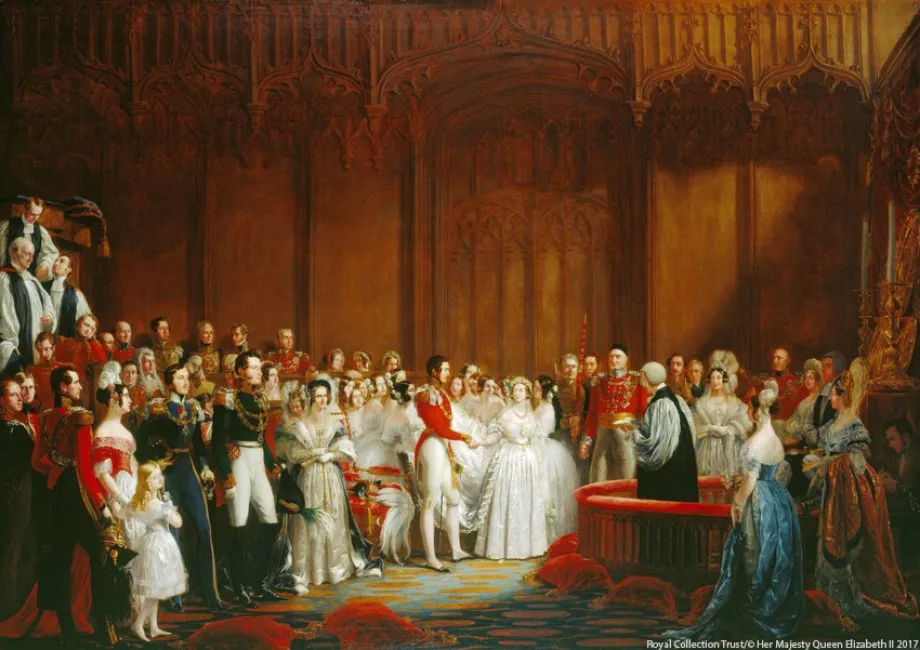
After Princess Victoria became Queen in 1837, the cousins met again in October 1839 and their engagement was announced on 23 November that year. The marriage took place on 10 February 1840 in the Chapel Royal, St James's Palace.
In 1840 Prince Albert was made a Knight of the Garter and created a Privy Counsellor, and in 1857 he was officially given the formal title of Prince Consort.
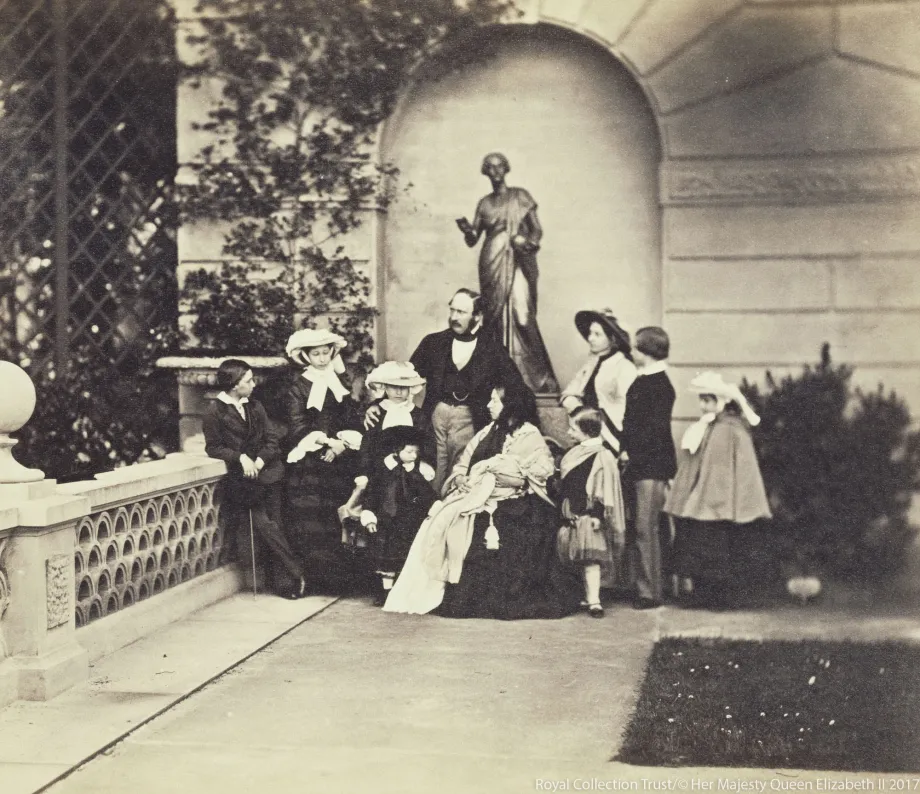
Family life was of great importance to Prince Albert: he found much pleasure in the company of his nine children. He enjoyed festive occasions, and among his contributions to British life was the popularising of the Christmas tree (already introduced to Britain in the eighteenth century by Queen Charlotte).
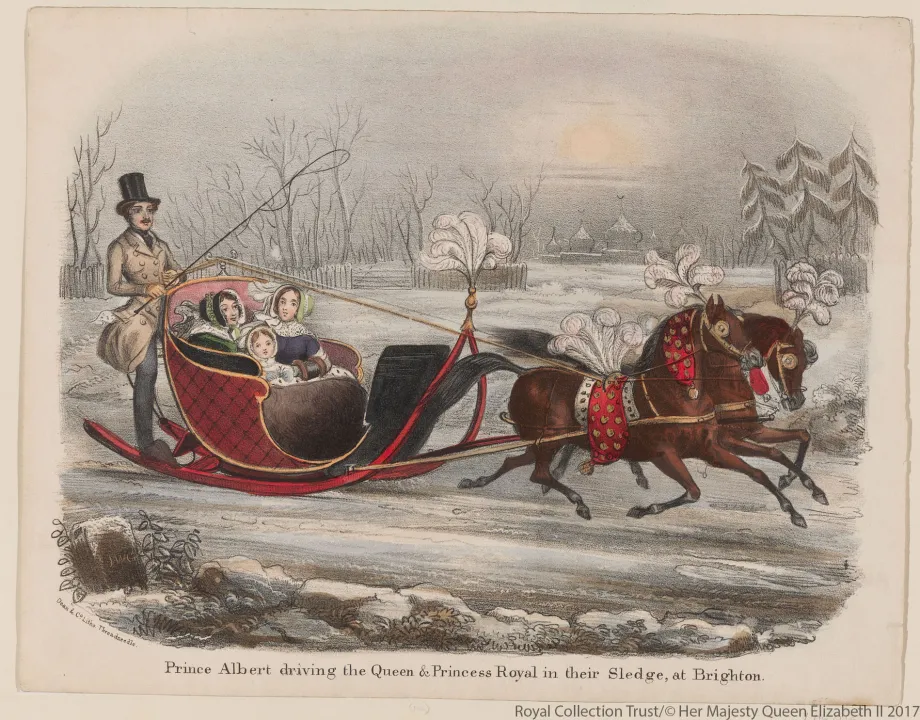
The family divided their time between Buckingham Palace, Windsor Castle, Balmoral and Osborne. Prince Albert supervised closely the redesigning of Osborne House and the building of the new Balmoral Castle. Agricultural science was one of his many interests; he studied new developments in farming and modernised the farms at Windsor, Osborne and Balmoral.
Public Life
By the end of 1840, Prince Albert had already become, in effect, Private Secretary to The Queen. He was given full access to Cabinet and other State papers, and from 1841 onwards he attended audiences which The Queen held with her ministers. He steered The Queen away from her close identification with the Whigs, and told her that the Crown should be above party.
Prince Albert's knowledge and experience of the Continent gave him considerable influence over The Queen in the field of foreign affairs. He corresponded freely with continental Sovereigns – to several of home he was of course related – on diplomatic and political questions.
In domestic affairs, Prince Albert's influence was exerted in the direction of humanitarianism and moderate reform. He spoke out against slavery and child labour, and was instrumental in securing the abolition of duelling between Army officers.
Innovation
Prince Albert's main influence upon Britain proved to be intellectual and aesthetic; he was determined to that his adopted country should be at the forefront of modern science, art appreciation and art education.
With the active encouragement of The Queen, The Prince brought order to the administration of The Royal Collection. He arranged that neglected pictures should be examined and restored and most importantly initiated the great inventory of royal pictures.
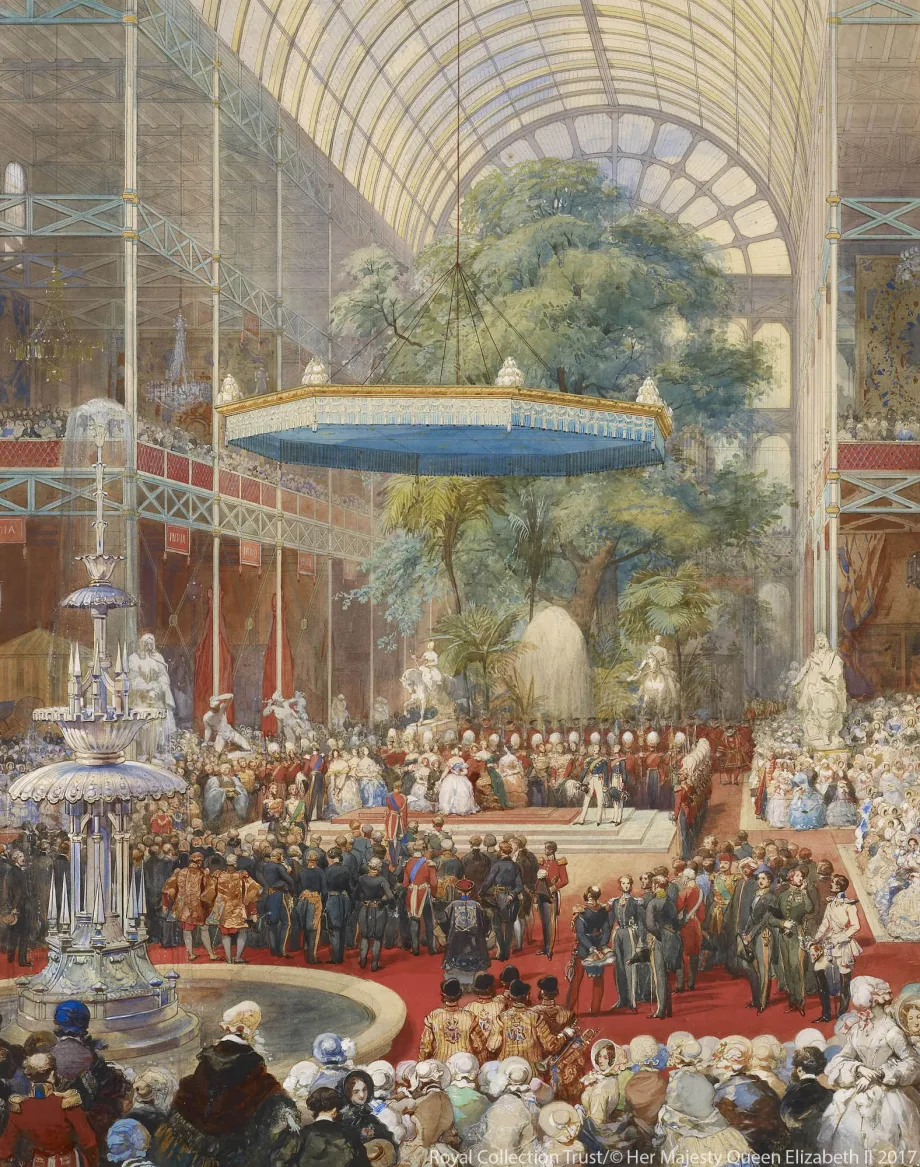
As President of the Fine Arts Commission, Prince Albert bore the chief responsibility for the organisation of the scheme for the decoration of the new Palace of Westminster. The phenomenal success of the Great Exhibition of 1851 was a personal triumph for The Prince, who had indeed initiated it and presided over the preliminary planning of the event.
The Prince's deep feeling for and knowledge for music found expression not only in private music making – composing, playing the organ or singing and playing the piano with The Queen – but also in his activities as an enlightened patron of music. In 1840 he was appointed a Director of the Concerts of Ancient Music in London and showed a wide-ranging and adventurous taste in selecting music for these concerts and for those of the Philharmonic Society, at which the conductors included Schubert, Schumann and Mendelssohn.
Elected as Chancellor of Cambridge University in 1847, Prince Albert played a large part in reviving the spirit of learning there. Shocked at the narrowness of the curriculum, he helped institute both the Natural Science Tripos and the Moral Science Tripos; and he founded the Institution which was to become Imperial College in London, the first British university to be dedicated to scientific research.
Prince Albert also took an active interest in all aspects of Army organisation. It was he who suggested the setting up of an Army training camp, an innovation in England. He urged reform of the Army to overcome the inadequacies exposed by the Crimean War, and he championed a new award for acts of extreme valour: the Victoria Cross.
Death
Over the years, overwork undermined Prince Albert's health and during the 1850s he became increasingly tired and suffered bouts of ill health. He died from typhoid fever on 14 December 1861 at Windsor Castle with Queen Victoria and five of his children at his bedside.
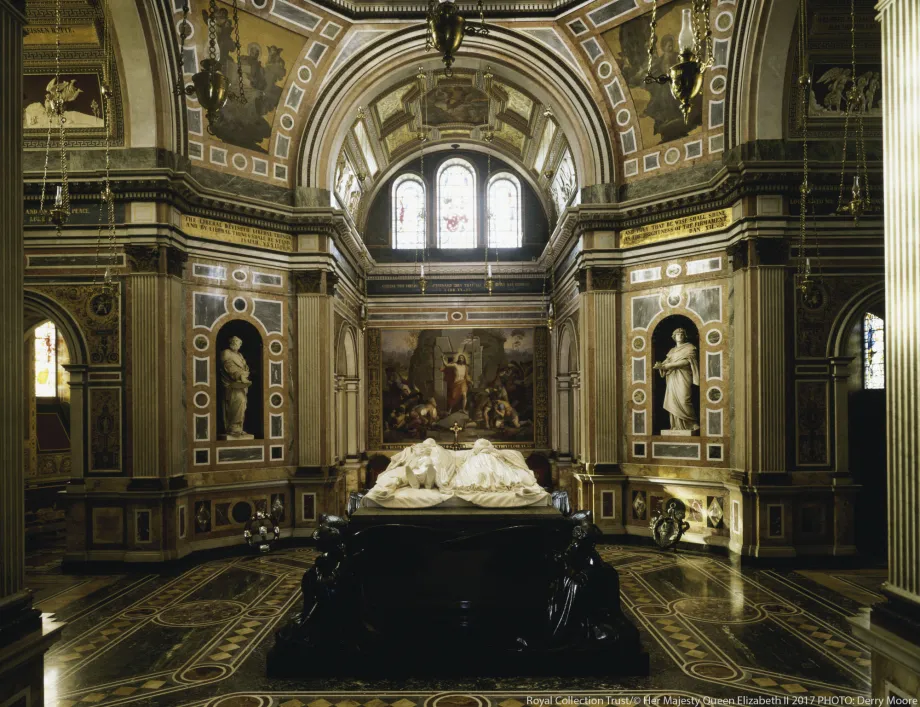
His body was placed temporarily in the Royal Vault, St George's Chapel and on 18 December 1862 he was buried in the Royal Mausoleum at Frogmore.
To learn more about Prince Albert’s life and achievements, visit the Royal Collection Trust's website here, which features more than 17,500 photographs, prints and papers relating to Prince Albert.