A speech by HRH The Prince of Wales at an Oxford Centre for Islamic Studies event with the Sultan of Brunei, London
Published
We may be living in an age which, perhaps for no better reason than that “bad news sells”, celebrates negative images over optimism, disaster over progress, crisis over creativity.
Your Majesty, Your Royal Highness, Excellencies, Ladies and Gentlemen.
It is a great pleasure – indeed an honour – for me to be here today to receive this most prestigious award from Your Majesty. You endowed it, as you have so generously endowed so many worthy prizes at the Oxford Centre for Islamic Studies, with the express aim of furthering better understanding between Islamic and Western Civilisations. It means a great deal to me that the International Jury should have thought me a worthy recipient of this award and I am deeply grateful. Thank you.
When I became Patron of the Oxford Centre for Islamic Studies, some eleven years ago now, I first expressed in public my earnest hope that the Islamic world and the West would be able to develop greater understanding through constructive dialogue. I must confess that, at the time, I was enormously heartened by the warm welcome that this message received throughout the Islamic world – indeed, people still talk to me about my Oxford speech as if I'd made it only yesterday and it is the only speech I have ever made whose publication continues to make money for my Charitable Foundation...
It seems that I was not alone in thinking that Islam and the West were at something of a crossroads. People felt there was a pressing need to resolve growing differences by trying to understand them, rather than trying to pretend they didn't exist. They felt a need to attend to long-standing and well-known grievances, and to work to settle them. If people felt this then, how much more strongly do they feel it today, when the dangers of a failure to understand, and to address justified grievance, seem so much more acute and threatening?
The citation for this award talks about encouraging dialogue. Dialogue is an effort to build trust and respect – it succeeds to the extent that we learn to see the others' point of view, and to share some feeling for their needs and priorities. On a wider stage, it is about creating an environment for constructive engagement on specific issues, both within and between nations.
In my view, the foundations for proper dialogue are threefold. The first is education – teaching people to be more open to others, however different (even outlandish) they may at first appear. The second, and perhaps the most important in my opinion, is good manners – listening politely so that everyone, even the less articulate, feel their voice can be heard. The third is optimism and looking forward, so that we don't get mired in the history and grievances of yesterday, but rather try to find common ground now to establish a shared and better future.
I would like to pay tribute to the work of the Oxford Centre towards all three of these objectives – and to thank those of you who have supported it so generously. The steady expansion of its academic and student numbers, and its commitment to the creation of a worthy and lasting home for Islamic study among the greatest of the Oxford colleges, is something which brings me great satisfaction and pride. Likewise, the work of my School for Traditional Arts, which seeks to celebrate the best of the artistic traditions of all the major faiths, and to rediscover craftsmanship and design which, in my view, help people to find their spiritual and cultural roots in an increasingly rootless age. I hope that you will have the chance to admire some of their work, and to meet some of my students, after this presentation.
I have said that dialogue requires education and understanding and positive thinking. I also believe that, when dialogue happens, it justifies celebration. The reach of modern communications has enabled more people than ever before to be aware of the conditions of life on the far side of the world. Governments, and privileged interests associated with them, can no longer be sure of managing the popular will because they can no longer control the flow of information and images which shape people's ideas and emotions – the sources of information are too many, and too diversely located. Like it or not, people are making common cause across national and cultural boundaries. And in doing so, they show that it is possible for people to collaborate successfully on particular environmental, political and cultural issues, in spite of differences on other issues. I think this can be enormously positive – the resurgence of what is rather ponderously called “civil society” is much to be welcomed and celebrated.
But I think we need to accept that, however many individuals are involved in such informal dialogue, it cannot by itself constitute a cultural mainstream. The attitudes and activities of formal public institutions remain decisive. It is national and international laws which regulate the conditions in which the encounters between Islam and the West take place. We need honestly to ask ourselves how fairly we are applying those laws. When people cry “Injustice!”, are they justified? Likewise we need to accept that it is school textbooks, reference materials and curricula which mark out cultural expectations, even if these can be refined by openness throughout our lives. If we are to guard against stereotypes and negative attitudes, we need to ensure that our teaching materials are fair and open – not stifled by political correctness, but rather oxygenated by the fresh air of honesty, balance, and justice.
Ladies and gentlemen, there are many today who seem to think that we are living in the dawn of a new, more dangerous, more isolated age. It is easy to dwell on the last decade as one of increased confrontation, intolerance and polarisation. The images of September 11th, of Afghanistan and Iraq, of the continuing horrors in the Holy Land, and the recent murders in Saudi Arabia: these are pervasive and not easily balanced with more positive pictures of reconciliation and understanding. Many appear to argue that we have passed the point of understanding. To them, dialogue is dead and we need to circle the wagons of our own culture, to the exclusion of others.
I could not disagree with them more profoundly. We may be living in an age which, perhaps for no better reason than that “bad news sells”, celebrates negative images over optimism, disaster over progress, crisis over creativity. But when you see, as I do, around this country and around the world, the steady growth, within and between communities, of understanding, of dialogue, of education and indeed of tolerance, I think there is considerable cause for optimism. We need to ensure that the cause of dialogue and understanding is not undermined by exaggerating fears and suspicions through tabloid stereotyping and knee jerk reactions. We need to celebrate the great common traditions, and the diversity, of our civilisations. We need to work to understand each other better, but in order to do so we need, above all, to understand ourselves.
Related content
Remarks by The King at 'A King's Trust Celebration' at the Royal Albert Hall
You'll all make a huge difference to this country and many others.
A speech by His Majesty The King at the White House State Dinner, Washington
Tonight, we are here to renew an indispensable alliance which has long been a cornerstone of prosperity and security for both British and American citizens. Our people have...
The King's Commonwealth Day Message 2026
Working together, we can ensure that the Commonwealth continues to stand as a force for good – grounded in community, committed to the kind of restorative sustainability that...
A message from The King on the death of Reverend Jesse Jackson
My wife and I were deeply saddened to hear of the death of the Reverend Jesse Jackson. We send our deepest sympathy to his family. I remember with great fondness meeting him...
A message from The King ahead of a reception at Windsor Castle to celebrate carers
So to those who provide care - whether you wear a uniform or simply the clothes you felt able to pull on in the morning - please know that the great love you show in small...
A message from The King, following the attack at Tumbler Ridge Secondary School in British Columbia
My wife and I were profoundly shocked and saddened to learn of the most dreadful attack at Tumbler Ridge Secondary School in British Columbia. We can only express our deepest...
Announcement of a State Visit by the President of the Federal Republic of Nigeria
A speech by His Majesty The King at the Lord High Admiral’s Divisions Parade, Britannia Royal Naval College, Dartmouth
My own service taught me that leadership is not about rank; it is, and has always been, about character. It is about making sound decisions under pressure, holding firm to our...
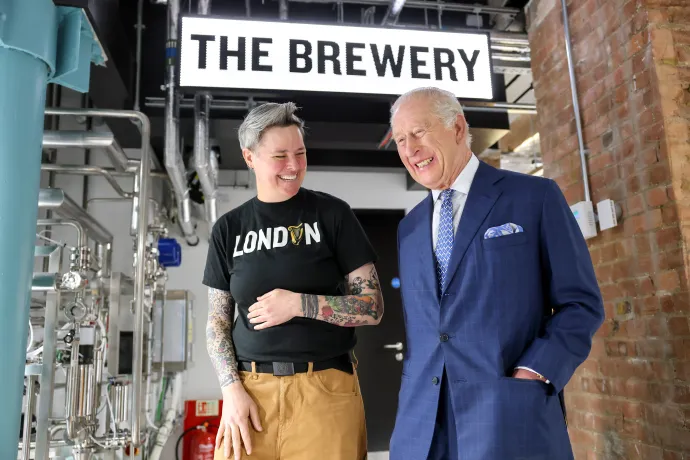
A message from The King in support of Stand Up To Cancer
Throughout my own cancer journey, I have been profoundly moved by what I can only call the 'community of care' that surrounds every cancer patient - the specialists, the...
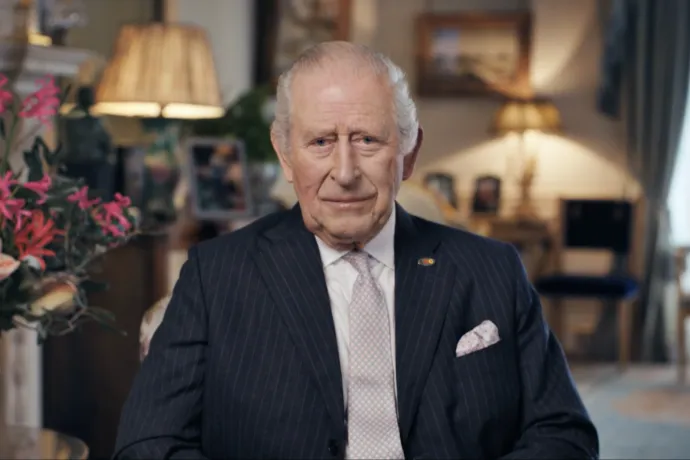
State Visit by The President of The Federal Republic of Germany and Ms. Büdenbender
03 December 2025
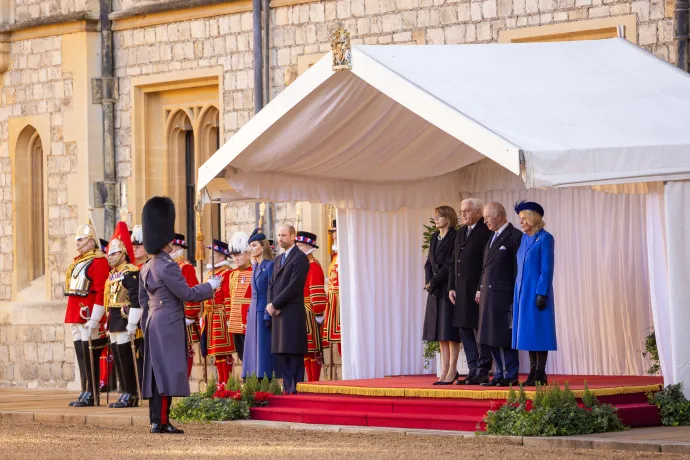
A message from The King to the people of South and Southeast Asia following devastating floods across the region.
My wife and I are deeply saddened to learn of the devastation caused by the terrible storms across South and Southeast Asia. We can only begin to imagine the scale of...
A message from The King to the people of Hong Kong following the devastating fire in Tai Po.
My wife and I were greatly saddened to learn of the devastating fire in Tai Po and feel deeply for the people of Hong Kong at such a tragic time. Our most heartfelt thoughts...
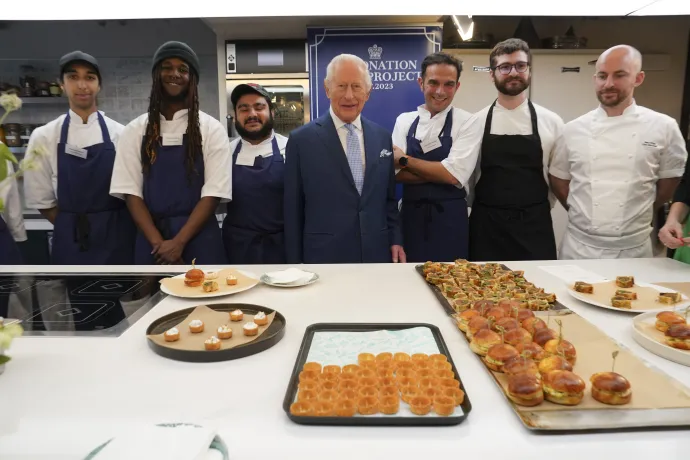
A message of condolence from His Majesty The King following the passing of Manfred Goldberg, Holocaust survivor and educator.
My wife and I were most deeply saddened to hear the news of Manfred Goldberg’s recent death and, together with everyone present, mourn his great loss in our hearts and souls...
A message from The King to the people of Jamaica and all those across the Caribbean affected by Hurricane Melissa
My wife and I have been deeply concerned and profoundly saddened to see the catastrophic damage caused by the ferocity of Hurricane Melissa in Jamaica and across the Caribbean...