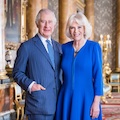
A speech by HRH The Prince of Wales at the unveiling of the official plaque to designate the Lake District National Park as a UNESCO World Heritage Site
Published
To me, it is something of a triumph that this traditional land use continues to this day, even in the face of severe social, economic and environmental pressures.
Secretary of State, Minister, Ladies and Gentlemen, I could not be more delighted to be with you here today on this very special occasion in what I happen to think is a particularly special part of the world.
Official recognition by the U.N.E.S.C.O. World Heritage I committee of the Lake District National Park as a World Heritage Site is a significant achievement, which I am told has taken thirty-one years. So I do congratulate Lord Clarke of Windermere and everyone else connected with the twenty-five organizations whose splendid efforts to achieve this recognition have finally been rewarded.
The inscription places the Lake District in the Cultural Landscape category. This seems entirely appropriate to me because, as far as I am concerned, the key to the incomparable beauty of the Lake District is that it is a consequence of more than a thousand years of human activity. Over that period, successive generations of farmers have worked in harmony with the natural world, rearing cattle and native breeds of sheep in ways that have shaped and enhanced a spectacular mountain landscape, to the enormous benefit of everyone fortunate enough to experience its delights.
To me, it is something of a triumph that this traditional land use continues to this day, even in the face of severe social, economic and environmental pressures. As we stand looking out over Derwent Water towards Borrowdale the importance of the link between human activity and landscape could not be clearer.
It is no surprise to learn that in the 18th century the quality of the landscape was recognised and celebrated by the Picturesque Movement, or that it was here that the Romantic Movement later developed a deeper and more balanced appreciation of the value of landscape, local society and a sense of place. Powerful ideas about the relationship between humans and landscape soon followed and to this day the sheer beauty to be found here strikes a sometimes unexpected, emotional chord deep inside many of us.
The Lake District has been enjoyed and valued by visitors for more than 250 years. Concern to protect it was the inspiration for the conservation movement, including the National Trust. It quickly became clear that some landscapes were so valuable to society that everyone should have the opportunity to appreciate them, but that this would require both legal protection and sensitive management. And this, of course, led to the formation of National Parks.
I very much hope that the Lake District’s recognition as a World Heritage Site will provide local businesses with additional opportunities to raise their profile and develop new products and services; draw more investment into the region; and help to ensure that traditional skills and crafts are maintained. Indeed, ladies and gentleman, it is a great testament to the wonders of the Lake District that it attracts some 15.8 million visitors each year and, as Patron of English Tourism Week, I am enormously proud of the diversity, hardiness and entrepreneurial flair of the very many businesses that thrive here come what may, floods and blizzards notwithstanding, and that have a terrific future ahead of them.
Having said that, ladies and gentlemen, I do hope that the accolade of World Heritage Site status might also prompt some careful reflection about just what it is that makes the Lake District so special. From where we stand we can glimpse the jaws of Borrowdale, a stunning Lakeland view leading to a valley that is a particular favourite of mine. But if we can look beyond the view, what we see is a traditional, pastoral system with multiple farmers grazing their hefted flocks of sheep across unfenced hills. This system of intricate fields in the valleys and open commons has evolved over a thousand years. The natural beauty of these mountains, lakes and valleys has been shaped by farming, just as much as farming practices have been shaped by the need to extract livelihoods from a harsh and testing environment. This is not an automated system, but one created and maintained by the daily actions of hill farmers to sustain their families, flocks and, in turn, their communities.
There are now around one thousand farming businesses in the Lake District. These families - because the vast majority are still family farms - are at the heart of securing the future of this World Heritage Site. This is not just my view, but that of U.N.E.S.C.O. whose advisors wrote; “The most defining feature of the region, which has deeply shaped the cultural landscape, is a long-standing and continuing agro-pastoral tradition.” It is no surprise to me that they went on to stress “the vulnerability of the agro-pastoral system”.
Over the last seventeen years I have made regular visits here, beginning at a time of crisis during Foot & Mouth. Over those years, as I have come to know local people and understand these unique farming communities, I am continually struck by their resilience and ability to overcome trials whether of family tragedy, pestilence or flooding. But we cannot take the survival of these very special communities for granted. Successful rural businesses are a pre-requisite to delivering benefits for the public.
Looking ahead, I am acutely conscious that the countryside can be a contested space, arousing strong passions among individual interests. Creating harmony between those interests may be easier said than done. But I am convinced it is not only possible, but essential to work collectively, understanding diverse points of view and ultimately delivering better outcomes for everyone.
I hope that a new project, "Our Common Cause: Our Upland Commons" will help in this process. Many organizations here today are contributing and it is receiving generous support from the Heritage Lottery Fund as well.
Ladies and gentlemen, whenever I come here, and – in the words of psalm 121 – "lift up my eyes unto the hills", I feel my spirits rise, and I know the same is true of countless others. So I would just like to end with a few words from William Wordsworth, who in 1810 so clearly felt the same way:
I do not indeed know any tract of country in which, within so narrow a compass, may be found an equal variety in the influences of light and shadow upon the grand or gentle features of landscape;...Yet, though thus clustered together, every valley has its distinct and separate character; in some instances as if they had been formed in studied contrast to each other, and in others with the united pleasing differences and resemblances of a sisterly rivalship.
Related content
Remarks by The King at 'A King's Trust Celebration' at the Royal Albert Hall
You'll all make a huge difference to this country and many others.
A speech by His Majesty The King at the White House State Dinner, Washington
Tonight, we are here to renew an indispensable alliance which has long been a cornerstone of prosperity and security for both British and American citizens. Our people have...
The King's Commonwealth Day Message 2026
Working together, we can ensure that the Commonwealth continues to stand as a force for good – grounded in community, committed to the kind of restorative sustainability that...
A message from The King on the death of Reverend Jesse Jackson
My wife and I were deeply saddened to hear of the death of the Reverend Jesse Jackson. We send our deepest sympathy to his family. I remember with great fondness meeting him...

A message from The King ahead of a reception at Windsor Castle to celebrate carers
So to those who provide care - whether you wear a uniform or simply the clothes you felt able to pull on in the morning - please know that the great love you show in small...
A message from The King, following the attack at Tumbler Ridge Secondary School in British Columbia
My wife and I were profoundly shocked and saddened to learn of the most dreadful attack at Tumbler Ridge Secondary School in British Columbia. We can only express our deepest...
Announcement of a State Visit by the President of the Federal Republic of Nigeria
A speech by His Majesty The King at the Lord High Admiral’s Divisions Parade, Britannia Royal Naval College, Dartmouth
My own service taught me that leadership is not about rank; it is, and has always been, about character. It is about making sound decisions under pressure, holding firm to our...

A message from The King in support of Stand Up To Cancer
Throughout my own cancer journey, I have been profoundly moved by what I can only call the 'community of care' that surrounds every cancer patient - the specialists, the...
State Visit by The President of The Federal Republic of Germany and Ms. Büdenbender
03 December 2025
A message from The King to the people of South and Southeast Asia following devastating floods across the region.
My wife and I are deeply saddened to learn of the devastation caused by the terrible storms across South and Southeast Asia. We can only begin to imagine the scale of...
A message from The King to the people of Hong Kong following the devastating fire in Tai Po.
My wife and I were greatly saddened to learn of the devastating fire in Tai Po and feel deeply for the people of Hong Kong at such a tragic time. Our most heartfelt thoughts...
A message of condolence from His Majesty The King following the passing of Manfred Goldberg, Holocaust survivor and educator.
My wife and I were most deeply saddened to hear the news of Manfred Goldberg’s recent death and, together with everyone present, mourn his great loss in our hearts and souls...
A message from The King to the people of Jamaica and all those across the Caribbean affected by Hurricane Melissa
My wife and I have been deeply concerned and profoundly saddened to see the catastrophic damage caused by the ferocity of Hurricane Melissa in Jamaica and across the Caribbean...