An article by HRH The Prince of Wales on nanotechnology, the Independent on Sunday

Published

Nanotechnologies involve particles of an unimaginably small size. The thickness of a human hair is 80,000 nanometers, and a pin head is generally agreed to be 1 million nanometres wide. The ability to work at this scale, at the level of individual molecules, is a triumph of human ingenuity.

I am well aware that promoting public debate about nanotechnology is an uncertain business. My first gentle attempt to draw the subject to wider attention resulted in ‘Prince fears grey goo nightmare' headlines. So, for the record, I have never used that expression and I do not believe that self-replicating robots, smaller than viruses, will one day multiply uncontrollably and devour our planet. Such beliefs should be left where they belong, in the realms of science fiction. The important thing is to get on with the sensible debate that should accompany the introduction of such technologies which work at the level of the basic building blocks of life itself.

Nanotechnologies involve particles of an unimaginably small size. The thickness of a human hair is 80,000 nanometers, and a pin head is generally agreed to be 1 million nanometres wide. The ability to work at this scale, at the level of individual molecules, is a triumph of human ingenuity. It is also a subject of huge scientific interest and commercial potential simply because matter behaves in fundamentally different ways at the nano-scale. These new properties will enable new applications, many of which will undoubtedly have perceived benefits to our society. If they don't, they won't be commercialized. But how are we going to ensure that proper attention is given to the risks that may also ensue? Discovering the secrets of the Universe is one thing; ensuring that those secrets are used wisely and appropriately is quite another.

So I am delighted that the Royal Society and the Royal Academy of Engineering are conducting a joint study on nanotechnology. This will help to separate the scientific facts from the science fiction, and the hope from the hype, providing the starting point for a much wider debate. Their report will be published in the next few weeks, but the evidence they have taken from a wide range of interested parties is already available on the Internet (www.nanotec.org.uk/evidence). The evidence covers a wide spectrum of opinion, much of it naturally concerned to ensure that the potential benefits from nanotechnology are not understated in the report.

I was particularly struck by the evidence provided by a recently-retired Professor of Engineering at Cambridge University, Professor John Carroll. He hopes that the investigation will ‘consider seriously those features that concern non-specialists and not just dismiss those concerns as ill-informed or Luddite'. Referring to the thalidomide disaster, he says it ‘would be surprising if nanotechnology did not offer similar upsets unless appropriate care and humility is observed.' He ends by pointing out that ‘it may not be easy to steer between a Luddite reaction and a capitulation to the brave new technological world, especially when money, jobs and business are at risk.' Those are my sentiments too, and I wish the Royal Society and Academy every success in steering that difficult course.

It is important, though, to ask, at this early stage, how we will ensure that risk assessment keeps pace with commercial development. This is clearly a very fast-moving area of science, involving many disciplines, yet if we look at the EU's research programme for nanotechnology, only an estimated 5 per cent of total funding is being spent on examining the environmental, social and ethical dimensions of these technologies. That certainly doesn't inspire confidence.

There are also important questions relating to the control and ownership of these technologies. Some of the work may have fundamental benefits to society, such as enabling the construction of much cheaper fuel-cells, or new ways of combatting ill-health, yet the techniques operate at the same scale as the ‘self-assembly' of natural processes. Is there a danger of awarding patents on Nature?

My final point concerns the apportionment of benefits and risks. The benefits will largely accrue to those who invest successfully in these technologies and to those who can utilize them. But these new applications will inevitably displace existing technologies. Who will lose from that process, and will it widen the existing disparities between rich and poor nations? What exactly are the risks attached to each of the techniques under discussion, who will bear them, and who will be liable if and when real life fails to follow the rose-tinted script?

This debate is still at an early stage. The Royal Society's research shows that only 29 per cent of the population currently even recognizes the term ‘nanotechnology'; those who do are generally positive about its potential. I suspect that broader public acceptance will only be achieved and maintained if public attitudes and regulatory processes are encouraged to develop at the same rate as the technology itself, and if a precautionary approach is seen to be applied.

There will also, I believe, have to be significantly greater social awareness, humility and openness on the part of the proponents of emerging nanotechnologies than we have seen with other so-called “technological advances” of recent years. Those are the things which, above all, I hope the Royal Society and Academy's report will encourage.

Related content

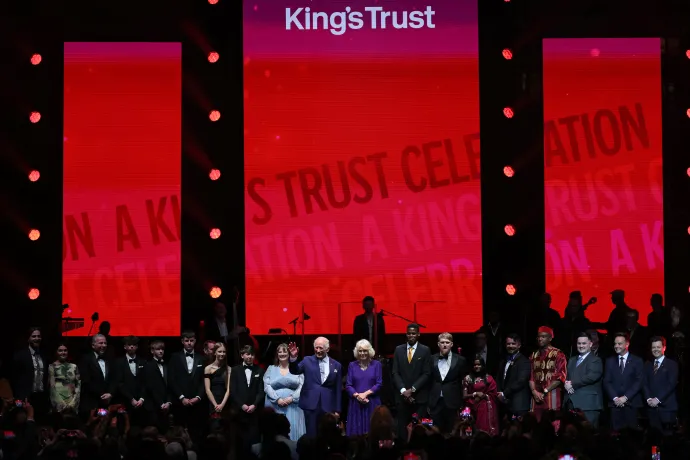
Remarks by The King at 'A King's Trust Celebration' at the Royal Albert Hall

You'll all make a huge difference to this country and many others.
18 May 2026
News

The King visits Bermuda

01 May 2026
The King in Bermuda

A speech by His Majesty The King at the White House State Dinner, Washington

Tonight, we are here to renew an indispensable alliance which has long been a cornerstone of prosperity and security for both British and American citizens. Our people have...


29 April 2026
News

Royal Maundy 2026

02 April 2026
Royal Maundy 2026
News

Commonwealth Day 2026

12 March 2026
Members of The Royal Family attend The Queen Elizabeth Prizes for Education

The King's Commonwealth Day Message 2026

Working together, we can ensure that the Commonwealth continues to stand as a force for good – grounded in community, committed to the kind of restorative sustainability that...

08 March 2026
Press release 03 March 2026

The King's Medal for Music 2024 & 2025

Read more
Press release 19 February 2026

A Statement from His Majesty The King

Read more
Press release 14 February 2026

The King’s Gold Medal for Poetry 2025

Read more

A message from The King on the death of Reverend Jesse Jackson

My wife and I were deeply saddened to hear of the death of the Reverend Jesse Jackson. We send our deepest sympathy to his family. I remember with great fondness meeting him...

18 February 2026

A message from The King ahead of a reception at Windsor Castle to celebrate carers

So to those who provide care - whether you wear a uniform or simply the clothes you felt able to pull on in the morning - please know that the great love you show in small...

12 February 2026

A message from The King, following the attack at Tumbler Ridge Secondary School in British Columbia

My wife and I were profoundly shocked and saddened to learn of the most dreadful attack at Tumbler Ridge Secondary School in British Columbia. We can only express our deepest...

11 February 2026
News

The King and Queen visit Dedham

12 February 2026
The King in Dedham

A speech by His Majesty The King at the Lord High Admiral’s Divisions Parade, Britannia Royal Naval College, Dartmouth

My own service taught me that leadership is not about rank; it is, and has always been, about character. It is about making sound decisions under pressure, holding firm to our...

19 December 2025

A message from The King in support of Stand Up To Cancer

Throughout my own cancer journey, I have been profoundly moved by what I can only call the 'community of care' that surrounds every cancer patient - the specialists, the...
12 December 2025

A message from The King to the people of South and Southeast Asia following devastating floods across the region.

My wife and I are deeply saddened to learn of the devastation caused by the terrible storms across South and Southeast Asia. We can only begin to imagine the scale of...

01 December 2025

A message from The King to the people of Hong Kong following the devastating fire in Tai Po.

My wife and I were greatly saddened to learn of the devastating fire in Tai Po and feel deeply for the people of Hong Kong at such a tragic time. Our most heartfelt thoughts...

28 November 2025

A message of condolence from His Majesty The King following the passing of Manfred Goldberg, Holocaust survivor and educator.

My wife and I were most deeply saddened to hear the news of Manfred Goldberg’s recent death and, together with everyone present, mourn his great loss in our hearts and souls...

07 November 2025

A message from The King to the people of Jamaica and all those across the Caribbean affected by Hurricane Melissa

My wife and I have been deeply concerned and profoundly saddened to see the catastrophic damage caused by the ferocity of Hurricane Melissa in Jamaica and across the Caribbean...

29 October 2025
News

State Visit to the Holy See

23 October 2025
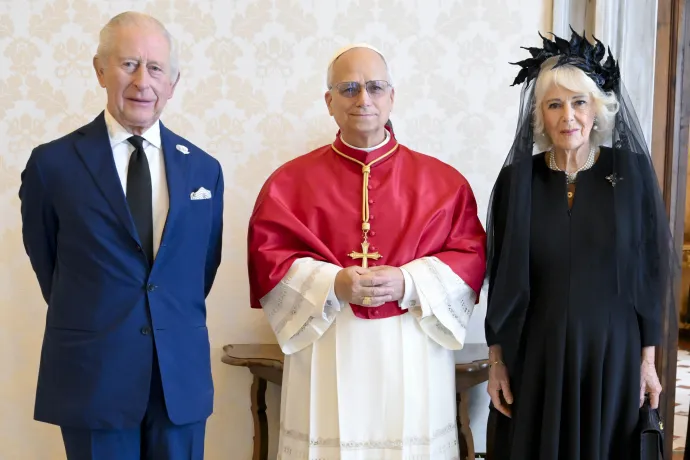
The King and Queen with Pope Leo