An article by HRH The Prince of Wales titled Countryside - changes?, The National Trust Magazine

Published

The ancient idea that mankind has a responsibility for the stewardship of the natural world, and hence of the countryside, may not be particularly fashionable, but I believe that it lies at the heart of the concept of sustainability, which has currently received so much attention.

Throughout our history we have depended on the countryside for commodities essential to our existence, such as food, water and timber. At the same time, we have relied on that same countryside for various forms of recreation, both active and passive. In the process, we have shaped our countryside in ways which are now perhaps not always apparent. The truth is that almost all of our countryside is, and has been for thousands of years, a managed environment in which our every action, or inaction, affects the legacy we have inherited and which we will pass on. 

The ancient idea that mankind has a responsibility for the stewardship of the natural world, and hence of the countryside, may not be particularly fashionable, but I believe that it lies at the heart of the concept of sustainability, which has currently received so much attention. We will only achieve sustainability by looking carefully at all the long-term consequences of our actions, recognising that natural systems have finite limits, and then acting with appropriate restraint and caution. That process, to me, constitutes good stewardship and I believe that it is becoming more rather than less important in the countryside, for two reasons. Firstly, there is the need to exercise our ever-increasing technological power, which allows us to make immense and often irreversible changes very rapidly indeed, with good judgement and careful planning. Secondly, in an increasingly uncertain world, one of the few things about which we can be sure is that our children, and their children, will live in an even busier, more stressful and more crowded world than our own. Their need to escape to the peace and beauty of the countryside will certainly be no less than ours.

Historically, the stewardship of much of the countryside has been in the hands of large estates, which have provided stability and continuity of management over a number of generations. This form of ownership has brought many benefits to the countryside and to those who live and work there. Of course, there have been exceptions to the rule, which have always been well-publicised but, on the whole, beautiful landscapes have been preserved for their own sake, or have been maintained, and decisions of all sorts have been taken with an unflinching eye on the long-term value and potential of the estate. There are still excellent examples, such as Chatsworth in Derbyshire and Holkham in Norfolk, of this approach being practised, but increased financial pressures are making life generally more difficult and the National Trust has stepped in to provide enlightened long-term management, along traditional lines, for a number of estates. Many others have been split up.

One of the characteristics of traditional estate management has been the establishment of distinctive local styles of building, often coupled with a determination to build something which looks right in its setting and which will last. As the role of traditional estates diminishes, it would be tragic if we were to begin to lose that distinctiveness which marks out one area as different from another. It seems to me crucial that ways are found to ensure that when it is necessary to have new buildings in the countryside, we can have the most appropriate sort of buildings, in the most appropriate places. With the highest standards of architecture and design, and proper respect for the local vernacular, we can still produce buildings which fit naturally into the landscape. I know, for instance, that the National Trust - and the National Parks Authorities - take great trouble in this regard. It is through attention to detail that a sense of harmony is maintained.

The countryside has changed dramatically over the first 100 years of the National Trust's existence and the pace of change is, if anything, increasing. Many of the changes are a consequence of the way the land is managed. Even a relatively small change, such as switching from hay-making to silage (which is cut earlier) has resulted in the loss of the corncrake throughout most of Britain over the last 30 years. More obviously, populations of skylarks, symbol of the countryside for generations, appear much reduced by modern agriculture. It may be changes in policy rather than practice which have increased the size of sheep flocks in upland Britain, but the decline in plants and animals which survived under less intensive grazing is no less real.

The decline of employment in agriculture and, to a lesser extent, defence is also bringing changes. Many people in rural areas are facing major economic and social problems and there is now a pressing need to create new jobs which can be sustained, together with appropriate training facilities and carefully planned new developments. Of course, such suggestions can be unwelcome to some of those people who have moved from the cities to the countryside but we must not forget that the countryside is, and always has been, a place for work as well as for recreation. The challenge is to find the right balance.

I believe that, in 100 years time, the countryside will still be a place where people live, work and relax. Certain aspects of the countryside will inevitably change as society changes. But there are many things in the countryside which need protecting and nurturing through such changes, whether they are rural communities, buildings, rare habitats and species or just hedges and trees. I don't think we should be embarrassed about wanting to protect such timeless things. Indeed, the National Trust's very raison d'etre is to protect our natural and cultural heritage. The Trust cannot ignore change in the countryside any more than society can, but it has an important responsibility to remind those in power of a basic tenet of good stewardship - that change has to happen at a pace which society and the environment can tolerate.

Management of the countryside needs resources, skill, patience and a great deal of goodwill - all of which the Trust uses to great effect. It obviously cannot manage the whole of the countryside or all of our historic buildings. However, I do think the Trust has a role to play in engaging a wider audience in debate and activity aimed at protecting and enhancing the whole of our natural heritage, and not just the special places. This means going beyond its already wide membership and specialist audiences and taking its core message to the wider world. I have no doubt that the Trust is well placed to lead such discussions and was delighted to learn that this will happen for the first time at a Centenary Countryside Conference to be held in Manchester in September. I am sure it will be a success and will look forward to reading about the proceedings in a future edition of this magazine.

Related content

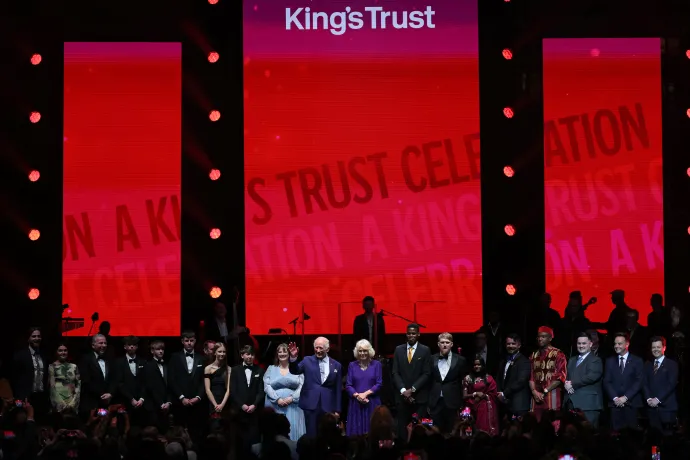
Remarks by The King at 'A King's Trust Celebration' at the Royal Albert Hall

You'll all make a huge difference to this country and many others.
18 May 2026
News

The King visits Bermuda

01 May 2026
The King in Bermuda

A speech by His Majesty The King at the White House State Dinner, Washington

Tonight, we are here to renew an indispensable alliance which has long been a cornerstone of prosperity and security for both British and American citizens. Our people have...

29 April 2026
News

Royal Maundy 2026

02 April 2026
Royal Maundy 2026
News

Commonwealth Day 2026

12 March 2026
Members of The Royal Family attend The Queen Elizabeth Prizes for Education

The King's Commonwealth Day Message 2026

Working together, we can ensure that the Commonwealth continues to stand as a force for good – grounded in community, committed to the kind of restorative sustainability that...
08 March 2026
Press release 03 March 2026

The King's Medal for Music 2024 & 2025

Read more
Press release 19 February 2026

A Statement from His Majesty The King

Read more
Press release 14 February 2026

The King’s Gold Medal for Poetry 2025

Read more

A message from The King on the death of Reverend Jesse Jackson

My wife and I were deeply saddened to hear of the death of the Reverend Jesse Jackson. We send our deepest sympathy to his family. I remember with great fondness meeting him...

18 February 2026

A message from The King ahead of a reception at Windsor Castle to celebrate carers

So to those who provide care - whether you wear a uniform or simply the clothes you felt able to pull on in the morning - please know that the great love you show in small...

12 February 2026

A message from The King, following the attack at Tumbler Ridge Secondary School in British Columbia

My wife and I were profoundly shocked and saddened to learn of the most dreadful attack at Tumbler Ridge Secondary School in British Columbia. We can only express our deepest...

11 February 2026
News

The King and Queen visit Dedham

12 February 2026
The King in Dedham

A speech by His Majesty The King at the Lord High Admiral’s Divisions Parade, Britannia Royal Naval College, Dartmouth

My own service taught me that leadership is not about rank; it is, and has always been, about character. It is about making sound decisions under pressure, holding firm to our...

19 December 2025

A message from The King in support of Stand Up To Cancer

Throughout my own cancer journey, I have been profoundly moved by what I can only call the 'community of care' that surrounds every cancer patient - the specialists, the...
12 December 2025

A message from The King to the people of South and Southeast Asia following devastating floods across the region.

My wife and I are deeply saddened to learn of the devastation caused by the terrible storms across South and Southeast Asia. We can only begin to imagine the scale of...

01 December 2025

A message from The King to the people of Hong Kong following the devastating fire in Tai Po.

My wife and I were greatly saddened to learn of the devastating fire in Tai Po and feel deeply for the people of Hong Kong at such a tragic time. Our most heartfelt thoughts...
28 November 2025

A message of condolence from His Majesty The King following the passing of Manfred Goldberg, Holocaust survivor and educator.

My wife and I were most deeply saddened to hear the news of Manfred Goldberg’s recent death and, together with everyone present, mourn his great loss in our hearts and souls...

07 November 2025

A message from The King to the people of Jamaica and all those across the Caribbean affected by Hurricane Melissa

My wife and I have been deeply concerned and profoundly saddened to see the catastrophic damage caused by the ferocity of Hurricane Melissa in Jamaica and across the Caribbean...
29 October 2025
News

State Visit to the Holy See

23 October 2025
The King and Queen with Pope Leo