If the nightmare of foot and mouth has served any useful purpose it is, perhaps, to bring the desperate plight of those who live and work in the countryside to a far wider audience. Millions of people were made aware of the fragility of the rural economy and the way of life it sustains - as well as the real hardship being faced by so many people.
If the nightmare of foot and mouth has served any useful purpose it is, perhaps, to bring the desperate plight of those who live and work in the countryside to a far wider audience. Millions of people were made aware of the fragility of the rural economy and the way of life it sustains - as well as the real hardship being faced by so many people.
But perhaps what many people do not realise is what they can do to help. That is why, tomorrow, I am launching Business in the Community's Rural Action programme - a new initiative to encourage companies to use their immense power for good to help our rural communities. It is a call for action to all those businesses which care about what happens to 90% of the land mass of this country and those who live and work in it.
Nearly 20 years ago I became President of Business in the Community because I was growing increasingly concerned about the desperate situation facing so many inner cities. It was the time of the riots in Brixton and Toxteth when, to a large extent, it seemed that the wider community had decided these problems were someone else's responsibility. I believed they were the responsibility of each and every one of us - not least the business community. Since that time Business in the Community has rightly focused its attention on the inner cities - and the companies which have been a part of this have helped bring real relief to some of the most deprived areas of the country.
But in recent years rural communities have begun to suffer just as badly, although there is one particularly stark difference between the deprivation faced in urban and rural areas: unlike the inner cities, in the countryside many of the problems are hidden from the eye of the casual observer. Those facing the hardest times are often living cheek-by-jowl with the better-off. They may live amongst beautiful scenery, but this does not make their problems any less real or urgent.
Even before foot and mouth, agricultural returns and farm employment were at their lowest since the 1930s. Average farm incomes are now £5,200 per farm. Rural pubs have been closing at the rate of six a week, and the number of smaller local and village shops is declining with over 40 per cent of parishes without a permanent shop of any kind and 43 per cent with no Post Office. There are pockets of high unemployment in the countryside, particularly in isolated locations. Last year alone 20,000 jobs were lost in agriculture. And the long-term effect of foot and mouth on tourism and the wider business community has yet to be quantified.
But amongst all the grim statistics there is also a ray of hope. Within rural communities there is a remarkable resolve to create new businesses suited to the new world in which people find themselves. Farmers and their families have been finding ingenious ways to supplement their basic income by diversifying into every sort of business, from bed and breakfast, to cheese-making, to Internet companies. Women have been showing particular resourcefulness and enterprise: some 80 per cent of successful farm businesses have women behind them.
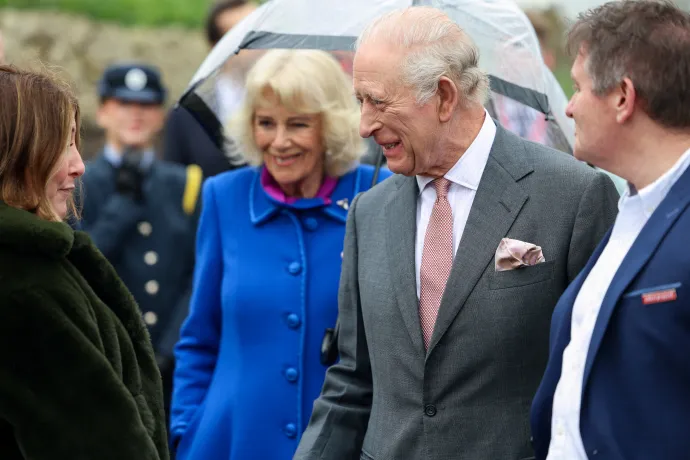
The potential for business leaders to encourage this spirit of determination and support initiatives such as these is great. That is why, over the last eight months, I have led four 'Seeing is Believing' visits to rural areas, taking business leaders to see for themselves the problems that exist. On each occasion the business leaders admitted that they had not understood the extent or urgency of the difficulties, or known how they could help, until they had seen them first-hand.
So what role can business play in the countryside? And why should it get involved?
The reasons are not simply economic, although such reasons clearly do exist: many companies have significant operations and sales, or draw staff from rural areas, and the food industry takes much of its raw materials from the countryside. For these companies, rural decline can mean business decline. But even if a company does not have a direct commercial connection, all businesses have a wider social responsibility and are answerable to more than just their shareholders. That is why tomorrow's Rural Action launch proposes practical action in four key areas.
Our first initiative is about local sourcing: encouraging businesses and the community to buy their food locally. There are huge environmental and economic advantages to eating what is produced locally rather than importing goods from hundreds, and sometimes thousands, of miles away. Imagine what a difference it would make if every hotel, in-house canteen and supermarket tried to buy its food first from local producers? Sainsbury's has proved that it is both popular and possible to do this - in Swansea, for example, in response to customer feedback, they have worked closely with a local ice-cream producer, Joe's, to make its renowned ice-cream available across Wales.
And in their Antrim stores the organic potatoes are all sourced from a local supplier. This sort of local sourcing should become the norm rather than the exception. That is why Business in the Community is working with the Institute of Grocery Distribution to develop case studies of best practice and to demonstrate that local sourcing can be a competitive advantage.
The second action area is for business to help with the provision of rural services - without which no community can survive, let alone flourish. We cannot turn the clock back, so we must be imaginative about finding alternatives to old ways.
For instance, with village shops, Post Offices and banks closing at an alarming rate, I want to see if we can make the 'Pub the Hub' by encouraging landlords to take on some of these services in the pub itself. The White Hart in Southwold, in Suffolk, is a good example of this kind of scheme. With support from Adnam's brewery, as well as their own investment and grants, they have been able to increase the pub's weekly income and give back to the villagers the services they want. But there are other ways business can help with local services. In Caldbeck in Cumbria, Ford donated a minibus to give community transport to seven parishes. Operated by a team of volunteer drivers, it has made a huge impact on the lives of many local people, particularly the elderly, as well as keeping the sense of community alive.
The revival of market towns, which for centuries have been important as centres of rural economic activity but are now in decline, is the third initiative. Business in the Community Rural Action already has a pilot scheme in Yorkshire, supported financially by the Countryside Agency and RDA Yorkshire Forward, to bring forward professional business skills to rebrand and manage market towns so that they can attract businesses and become engines for regional economic enterprise. With the active help of businesses, BITC wants to roll this out nationally.
And, finally, business needs to support the community entrepreneur. If there is one thing I have learnt over the years, it is that imposing solutions on any community from on high achieves little more than resentment. There are already thousands of individuals around the country giving leadership in their own communities. All they need is help, advice and maybe a little financial support.
For instance, in the village of Orton in Cumbria, a Farmers' Market has made the difference between success and failure for a number of local producers. When one of the organisers, Jane Brook, was struggling to set it up, what she needed above all was advice on how to overcome bureaucracy, as well as some marketing help. Having heard of Jane's experiences on one of my Seeing is Believing visits, The Co-operative Group is now generously leading a 'Partners in Rural Leadership' programme which will bring together an initial 50 rural entrepreneurs with 50 leading business managers in order to share ideas and offer advice.
On top of this The Cooperative Group is providing access to computer resources and on-line networks. And as an extension to this, Business in the Community is partnering Harper Adams College to expand their 'Women in Rural Enterprise' scheme nationwide specifically to help women start new businesses or diversify, and HSBC is providing a package of finance and business support, including softer loans and training its branch managers to ensure they better understand the problems that women entrepreneurs might be facing.
From the business leaders with whom I am already working on the Rural Action initiative - and there are some big names who have already signed up, apart from the ones I have already mentioned, like Lloyds TSB, Bulmers, Cosignia, SPAR and United Utilities - I know that there is a determination and a goodwill to act. From the pilot schemes that we are already operating, we know what a difference corporate involvement can make. Business must not underestimate the power that it has, with its unique resources and skills, to help keep alive communities in our countryside.
There has been much talk during the foot-and-mouth crisis of the long-term consequences of slaughtering so-called 'hefted' flocks of sheep. These are sheep which, through generations of breeding, have come to know their territory intimately and have adapted to the particular conditions of their habitat. Likewise, if that link between the farming communities and their land which has been built up over generations is severed, we will have lost something precious which cannot be reinvented. We simply must find a way to ensure that people born and bred in the countryside, and who want to stay there, can find an economic future, be that on the family farm or running their own business.
The British countryside is only as beautiful as it is because it has been cared for, and lived in, by these people with generations of experience and knowledge. The unique scenery, and the people who live amongst it, are one of this country's most treasured national assets, and a crucial economic resource with so much income coming from tourism. It has never been more threatened than it is today and the opportunities for business to make a real and lasting impact have never been greater. With your help, Business in the Community can make a substantial difference.