An article by The Prince of Wales for the 'Building for the Future' supplement in The Times
Published
Many people, I think, would probably acknowledge the urgent need to improve the design of ordinary housing in the British Isles alongside better integrated neighbourhood design.
The reasons to do so run far deeper than aesthetic considerations. As a result of living through a period of plentiful energy, we have tended to forget the fundamentals of successful community that have developed over hundreds of years. These include walkable catchment areas for a mix of social, retail and other uses, attractive shared streets and public spaces, a natural blend of different age groups and households of different sizes and incomes in proximity to one another. These principles, coupled with architectural styles that evolved organically from local circumstance and materials, have given us a legacy of special places – generally our historic town centres - whose common denominator is a refreshing lack of reliance on cars and cheap mobility for the mechanics of daily life to function.
It is upon this legacy that we are now trying, with varying degrees of success, to build in a way that will serve our own successors well. This has to mean reducing the “carbon cost” of our houses and daily activity to the absolute minimum. The recent work of my Foundation for the Built Environment has been particularly focused on addressing the issue of climate change. The Foundation, working with associates in many different spheres, can now demonstrate that places designed around the pedestrian actually effect a reduction in daily car use. As a corollary, the Foundation’s work on housing markets has also shown that new places designed around the principles of “Sustainable Urbanism” garner higher value in a relatively short space of time and therefore represent a good investment for developers and homeowners. Such principles, if followed, can also be shown to produce enhanced social and environmental value.
In addition, the Foundation can demonstrate that we are able to achieve the much-needed energy reduction targets we have set for both building and living in new homes by heeding the lessons of tradition, and that “Eco-Homes” need not wear an alien face to be energy-efficient. The “Natural House”, currently under construction by my Foundation at the Building Research Establishment, points the way to a new model for green building that suits any site condition, is cost effective and is easily adapted for volume building. The design has a contemporary, yet timeless feel, even though it is based on time-honoured, geometric principles of balance and harmony. The materials employed are largely from natural sources, either grown or from the ground; the main walling material is a new form of clay brick, easier and quicker to lay than traditional bricks, but with far higher insulating properties that meet modern expectations of thermal performance. The clever design of the bricks means air trapped inside the wall becomes the primary insulating material and such clay bricks have been used in Germany for the past nineteen years.
“The Natural House” will raise important findings about true sustainability that I hope will be useful to a building industry facing root and branch change in the next few years. I am sure that well-informed consumers will demand more of their new homes – not only energy efficiency, but attractive, spacious, and natural constituent parts of real communities. They will discriminate between the developments that make real places and those that do not. They will be more likely to vote for a strongly defined character offered by durable materials suited to local conditions, well-managed public spaces and green amenities, and the sort of variety and individuality that we cherish in the best historic neighbourhoods.
It is hardly an exercise in nostalgia to recognize that traditional architecture, particularly our unrivalled domestic vernacular, represents a pragmatic response to limited resources and limited energy reserves from which we can still learn today, even as we incorporate the best of appropriate and contemporary “green” technology. Equally, the traditional town was entirely walkable, while early suburbs were served by trams and trains, an example of science contributing to cohesive society. The present domination of the car over the pedestrian, in planning and engineering terms, is of course a complicating factor. We must surely be able to organize ourselves – as the Victorians did – in ways in which we are not dependent on it to such a great extent for our daily needs. This kind of public transport-oriented development is fundamental to achieving the ultimate goal of a “low carbon community”, and it is very likely that such communities, far from being austere, will actually become the sought-after places where people will choose to live and spend their time. This principle has been implemented in practice at Poundbury and it is heartening to see the real community that has now emerged as a well-mannered extension of Dorchester, one of our great English towns. I can only hope its lessons are emulated for the benefit of generations yet to come.
Related content
Remarks by The King at 'A King's Trust Celebration' at the Royal Albert Hall
You'll all make a huge difference to this country and many others.
A speech by His Majesty The King at the White House State Dinner, Washington
Tonight, we are here to renew an indispensable alliance which has long been a cornerstone of prosperity and security for both British and American citizens. Our people have...

The King's Commonwealth Day Message 2026
Working together, we can ensure that the Commonwealth continues to stand as a force for good – grounded in community, committed to the kind of restorative sustainability that...
A message from The King on the death of Reverend Jesse Jackson
My wife and I were deeply saddened to hear of the death of the Reverend Jesse Jackson. We send our deepest sympathy to his family. I remember with great fondness meeting him...
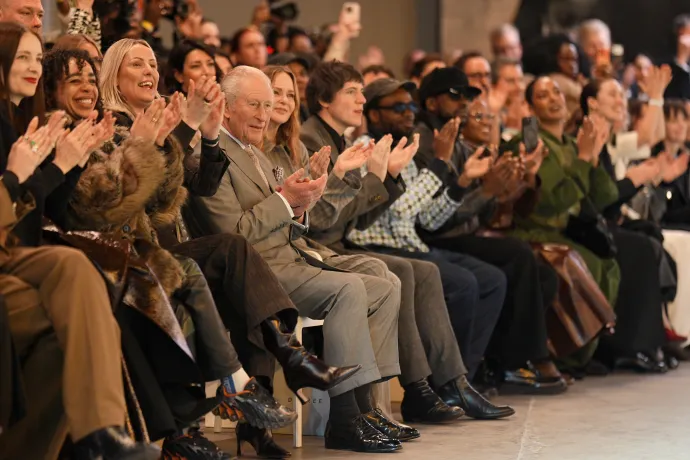
A message from The King ahead of a reception at Windsor Castle to celebrate carers
So to those who provide care - whether you wear a uniform or simply the clothes you felt able to pull on in the morning - please know that the great love you show in small...
A message from The King, following the attack at Tumbler Ridge Secondary School in British Columbia
My wife and I were profoundly shocked and saddened to learn of the most dreadful attack at Tumbler Ridge Secondary School in British Columbia. We can only express our deepest...
Announcement of a State Visit by the President of the Federal Republic of Nigeria
A speech by His Majesty The King at the Lord High Admiral’s Divisions Parade, Britannia Royal Naval College, Dartmouth
My own service taught me that leadership is not about rank; it is, and has always been, about character. It is about making sound decisions under pressure, holding firm to our...
A message from The King in support of Stand Up To Cancer
Throughout my own cancer journey, I have been profoundly moved by what I can only call the 'community of care' that surrounds every cancer patient - the specialists, the...
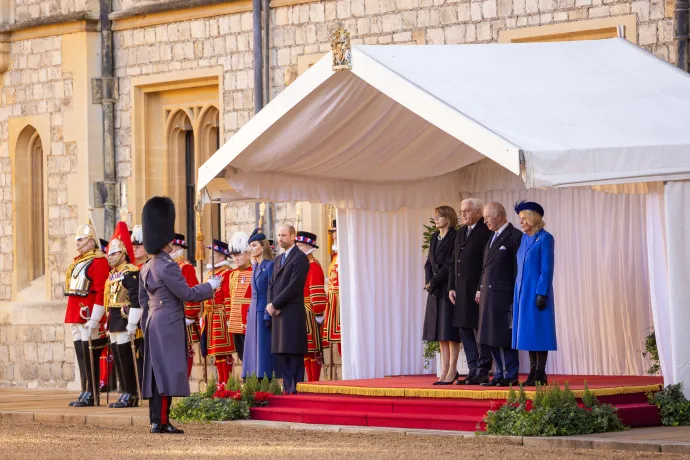
State Visit by The President of The Federal Republic of Germany and Ms. Büdenbender
03 December 2025
A message from The King to the people of South and Southeast Asia following devastating floods across the region.
My wife and I are deeply saddened to learn of the devastation caused by the terrible storms across South and Southeast Asia. We can only begin to imagine the scale of...
A message from The King to the people of Hong Kong following the devastating fire in Tai Po.
My wife and I were greatly saddened to learn of the devastating fire in Tai Po and feel deeply for the people of Hong Kong at such a tragic time. Our most heartfelt thoughts...
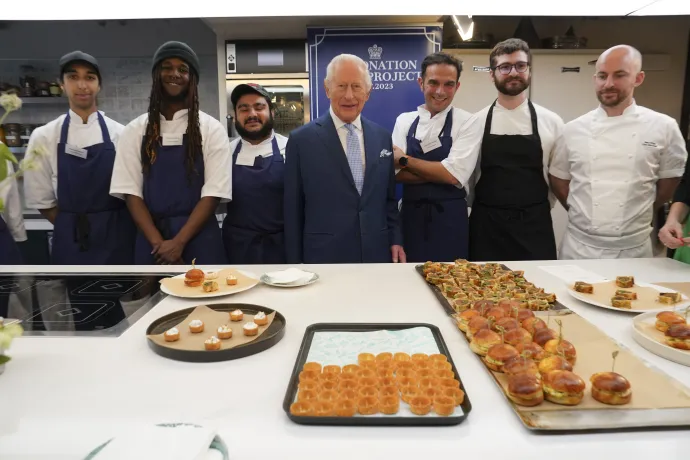
A message of condolence from His Majesty The King following the passing of Manfred Goldberg, Holocaust survivor and educator.
My wife and I were most deeply saddened to hear the news of Manfred Goldberg’s recent death and, together with everyone present, mourn his great loss in our hearts and souls...
A message from The King to the people of Jamaica and all those across the Caribbean affected by Hurricane Melissa
My wife and I have been deeply concerned and profoundly saddened to see the catastrophic damage caused by the ferocity of Hurricane Melissa in Jamaica and across the Caribbean...