Before I say anything else, coming to this Awards Ceremony has really made my year, mainly because for the first time I have met the 'Two Fat Ladies'. I enjoy their programme very much. It's by far the best thing on TV. [The Prince continued that they had come to the Home Farm at Highgrove and subsequently cooked some Aberdeen Angus beef for the girls at Westonbirt School.] It has given me enormous pleasure to see them here today.
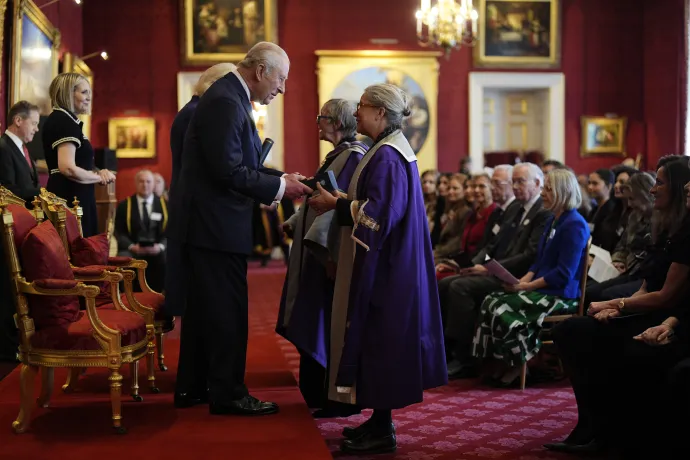
I can't tell you how proud and delighted I am to have been able to present these awards, at a time when the demand for organic food is higher than it has ever been. I do want to congratulate all the winners and to thank the judges who patiently sifted through more than 600 entries (a number which would have been inconceivable only a few years ago). YOU magazine also deserve all our thanks for continuing to bring organic food and farming to the public?s attention in a balanced and sensible way and I am very glad to have played a small part in this process. It is now 14 years since I first suggested that organic farming might have some benefits and ought to be taken seriously. I shall never forget the vehemence of the reaction - much of it coming from the sort of people who regard agriculture as an industrial process, with production as the sole yardstick of success. The only difference today is that they now see genetically modified crops (about which I shall say something else in a minute!) as the means of achieving their aims. So it is the greatest possible pleasure to see people here today who have dedicated so much time and unstinting effort to developing the organic farming sector, with such remarkable success and in the face of every sort of scepticism. I won't name names, other than congratulating the Soil Association. I will name names! Patrick Holden - a jolly good chap, I think. Elm Farm - Laurence Woodward - if it hadn't been for Elm Farm we would not have been able to convert Highgrove without all of their help and advice, and Henry Doubleday Research Association - Jackie and Alan Gear have done so much for the organic movement. And I salute Lady Eve Balfour as the original, courageous pioneer! I wish, I wish I had met her.
The demand for organic food is growing at a remarkable rate. Consumers have made it clear that they want organic produce and every sector of the food chain is responding, with the kind of results we have just seen. I am told that sales of meat, vegetables and milk are expected to double in the next year, and other sectors won't be that far behind. Indeed the current rate of growth of the market appears to be limited only by the availability of supply. And that, of course, is the problem! Between 60 and 70% of the organic produce sold in this country is imported - you don't need me to tell you this - and looks set to continue to be so. This has nothing to do with our climate, the CAP, or other factors beyond our direct control. Austria, Sweden and Denmark are all well on the way to having 10% of their farming organic by the year 2000. We could do the same in this country, but on current progress we might just achieve 1%. This must be a wasted opportunity at a time when it is also being forecast that 15% of farmers will cease farming this year - 15 per cent.
Now there seems to be a general assumption that we have too many farmers, and that this somehow represents a barrier to 'efficient farming' - whatever that is. Well the tragedy, as far as I am concerned, and it really is a tragedy, I believe, is that the farmers who are most vulnerable are those who operate small, family farms in the wilder and more remote parts of the country. It will be a national disgrace if we lose the people who are not only the backbone of rural culture but also the most effective stewards of the land, and the landscape. They practise agri-culture, not agri-industry, and the contribution they make to the life of this nation is, I believe, hugely undervalued.
Many farmers have told me on my travels that they do not wish either to manage an industrial-style food factory or to be employed virtually as park-keepers. Organic farming will be a much more attractive option for them now that the conversion grants have been raised. Leaving aside the question of whether or not a farming system which provides such benefits for the environment, wildlife, landscape, soil and rural employment also deserves support beyond the conversion period, I know that there are still concerns about the viability of the sector in the long run. Farmers' leaders fear that if too many of their members convert then the premiums for organic produce will drop and the sector will become uneconomic. I hope that the level of interest we have seen here today may reassure them that this country could support a considerably larger organic sector than we have at the moment. And we shouldn't forget that organic farming simply won't suit every farmer. To start with, it involves operating in more traditional ways. A nasty word that - tradition - (rather like mentioning God in articles on GMOs!) it makes certain people become apoplectic, as if it meant the end of 'progress' .... But the sort of tradition I am referring to involves respecting Nature's limits and accepting a number of restrictions in the name of sustainable husbandry. It also means actively promoting the health of crops and livestock, rather than merely just suppressing disease.
Of course the advocates of high-tech farming see an alternative way forward. They want genetically modified crops and as quickly as possible. Personally, I don't think it is right to tamper with the building blocks of life. I also regard the technology as unproven, with the potential to cause serious and possibly irreversible damage to wildlife and the environment. After all, we are only having this lunch today because there is such a growing reaction to the disastrous consequences of modern farming systems over the last 50 years, which have treated animals as machines and the land as if it was an industrial process in a factory, or even in a laboratory. And I know from a very large number of letters, that I am not alone in not wanting to eat any genetically modified produce.
Having made my own views on this subject rather well-known, I have to say at this point that I welcome the greater degree of official caution which has recently been expressed. The additional monitoring and research will, no doubt, provide some interesting results and, perhaps, reduce the damage to our wildlife and countryside. But we have to recognise that genetically modified food is already coming into this country in large quantities from elsewhere, and the only effective restraint will be strong and sustained pressure from consumers demanding choice in this particular matter. Many of them will be asking, as I continue to do, whether we actually need genetically modified food at all? Until someone can provide an answer, perhaps we should just compare organic and genetically modified food from the point of view of the consumer and our society generally?
Well, while the demand for organic food outstrips supply, we happen to know that 77% of consumers don?t want genetically engineered crops grown in this country. Consumers can choose whether or not to buy organic produce. Genetically modified ingredients will deny us choice in the long run.
Organic farming has been shown to provide major benefits for wildlife and the wider environment. The best that can be said about genetically engineered crops is that they will now be monitored to see how much damage they cause.
Organic farming provides food of the highest quality, and premium prices for farmers and retailers. The genetically modified crops we have seen so far are 'designed' to provide high yields, but don?t always achieve them.
Organic farming helps to sustain rural communities. A survey of Soil Association farms found that full-time employment increased by 80% after conversion. In the USA, one farmer growing genetically modified crops now needs less than a dozen staff to farm 8,000 acres.
In these circumstances it is hardly surprising that our large supermarket chains, with their extraordinary ability to monitor and respond to the views of their customers, are devoting ever-increasing shelf space to organic produce. The price, of course, is generally higher, but it should come as no surprise that this does not provide a barrier to sales. In every other area of our existence we accept that higher quality produce tends to cost more, whether we are looking at hi-fi equipment, holidays, cars or clothes. In the case of organic food even this isn't necessarily the case now that vegetable box schemes and farmers' markets are being developed so successfully in many different areas.
For far too long we have been conditioned to regard most forms of food simply as commodities. These awards are about the other side of the coin. They are a sustained celebration of excellence throughout the food chain. Above all, they remind us that high quality food, with taste and texture, can still be a part of our culture, making a major contribution to our quality of life, and that such things are worth some extra effort. Far-sighted and innovative companies, acting with integrity, play a crucial role in developing and maintaining the all-important chain of trust and value that links the farmer and the consumer, and I do congratulate all those whose efforts have been recognised today.
But if I can just add one cautionary note, I hope that everyone concerned with organic produce will recognise that the continued growth of this sector will depend on maintaining the current high standards, no matter how great the demand. There is a real risk that the kind of success demonstrated here today will attract people with the wrong motives and the wrong values to take up organic farming. We must all be vigilant in protecting what has been achieved, by ensuring that the organic sector has no room for the 'get rich quick' mentality, nor for second-rate produce.
It is vitally important that we can continue to say, with absolute conviction, that organic farming delivers the highest quality, best-tasting food, produced without artificial chemicals or genetic modification, and with respect for animal welfare and the environment, while helping to maintain the landscape and rural communities. I believe that the Organic Food Awards have an important part to play in this process, by encouraging excellence and innovation, and maintaining standards, and hope they will continue to grow and flourish in the years to come."