It is most heartening to see you all here this morning as it means you haven’t yet lost interest in the need to change our habits in terms of how we embed genuine sustainability into our accounting systems.
It is most heartening to see you all here this morning as it means you haven’t yet lost interest in the need to change our habits in terms of how we embed genuine sustainability into our accounting systems. This gathering is, to all intents and purposes, the third annual general meeting of my Accounting for Sustainability Project. Now that I am an honorary member of the Institute of Chartered Accountants, and at my third attempt, I almost feel well qualified to speak at this seminar, but not well enough really as I am not sufficiently creative! However, I am certainly extremely grateful to all of you for sparing the time from your hideously busy schedules to attend.
I have to say that I am rather surprised to find myself here; surprised that the small accounting project I started over three years ago seems to be going from strength to strength, and now has the support of an international network of accountancy bodies and, among others, an expanding number of leading private and public sector organizations. Most of this success is down to the brilliance and tenacity of my Principal Private, and Accounting, Secretary, Sir Michael Peat, and the team of people he has cunningly assembled around him.
The number of you who have been kind enough to attend, no doubt lured here by the excellence of the speakers who are to follow me, is testimony to the interest and support that there now is for this vital work. Perhaps in coming here today you were looking forward to a discussion about something other than the credit crunch and recession.
If this is the case I apologize, as I am afraid that a few words about the present economic circumstances are probably unavoidable; although I should add, in case anyone is in any doubt, that I am not an economist, but only a humble historian. However, I am going to be brave enough to tackle the topic because, dare I say it, there are a number of parallels that can be drawn between the current financial crisis and the looming, and even more alarming, environmental crisis.
There has been no shortage of analysis of the causes of the credit crunch, and there seem to be three key factors which are regularly identified by commentators.
Firstly, and most importantly, the huge increase in debt – in consuming today and paying tomorrow. During his talk at the annual general meeting of my charity, Business in the Community, the BBC Business Editor, Robert Peston, estimated that debt in the UK, including consumers, companies and the government, now stands at 300 per cent of annual GDP.
Secondly, there has clearly been a degree of over-confidence in the ability of market and regulatory systems to identify and mitigate the risks of this over-consumption.
And, thirdly, individuals and organizations have been incentivized, to use that rather ungrammatical modern word, to generate short-term profits irrespective of their long-term sustainability.
Ladies and gentlemen, these same three characteristics apply equally to the global environmental crisis.
With respect to debt – consuming today and paying tomorrow – it is vital to recognize that since the 1980’s human consumption of the planet’s resources has exceeded supply and we now use over twenty per cent more of the Earth’s bio-capacity than it can regenerate. And as I am sure you do not need reminding, atmospheric carbon dioxide is at its highest level for nearly a million years. Put simply, it is the Earth’s ‘natural capital’ that enables mankind’s continued existence and by depleting this natural capital at anything like the current unsustainable rate, we are accumulating a liability – a level of indebtedness – which will soon become impossible to make good.
As was the case during the credit boom, many remain confident that market and regulatory systems, and new technology, will identify and mitigate the risks of this over-consumption. However, the ecosystems on which we all rely for our survival are more complex and less well-understood than the global financial system, and my great fear – a long-held one, for which I have been roundly abused and ridiculed – is that by the time these problems are understood and addressed it will be too late and, very importantly, that unlike financial capital our natural capital cannot be replenished.
Professor Jared Diamond observed, in his analysis of how past civilizations have survived or collapsed in the face of ecological breakdown, that two actions seem to have been crucial in tipping the outcome towards success – long-term planning and a willingness to reconsider core values. In other words, and to return to our present economic situation, those civilizations which have too much emphasis on the short-term are less likely to survive and prosper.
The point I have been making is, of course, that the three principal factors which caused the credit crunch – over-consumption and indebtedness, over-confidence in market and regulatory systems and short-termism – also lie at the heart of a much more fundamental and alarming crisis, “the climate crunch”.
Just as the world is (hopefully) coming together to tackle the credit crunch, so we need to work together even more powerfully, and with the same sense of urgency, to tackle climate change and the challenges of a resource-constrained world. We need a new, and greater, level of international co-operation, very much including business and the accountancy profession, and, crucially, we need a much greater sense of the scale of the emergency and the action needed in the short-term.
I should add, ladies and gentlemen, that I am not trying to suggest that the climate crunch is more important than the financial crisis, or that we should focus on solving one rather than the other. On the contrary, a growing chorus of voices now urges a response which is geared to dealing with both at the same time, through an integrated programme for low carbon and resource-efficient development. New industries, millions of new jobs and many new commercial opportunities can go hand in hand with transformation toward an ecologically durable economy.
A vital building block in this process is better information, and better and more comprehensive approaches to measurement. We have no shortage of information about the financial dimension. We can see, for example, the prices of financial assets and the quantum of lending in a clear and measured way. However, the consequences of climate change and of over-consumption of finite natural resources are not as visible and quantified; and to add to this our current systems of reporting and accounting are too focused on measuring short-term financial impacts with values rarely given to the ecosystem services which sustain us. In other words, we lack the tools and systems to assess and report information about broader and longer term issues which, in the great scheme of things, are so much more important for us, and for our children and grandchildren, than any earnings per share or debt to equity ratio.
I set up my Accounting for Sustainability Project to tackle this issue and to help ensure that sustainability is not just talked and worried about, merely leading to a “business as usual with very small green knobs on”, but becomes embedded in organizations’ ‘DNA’.
As unfortunately often seems to be the case with my initiatives, it is a very ambitious project, undertaken with limited resources (and a Principal Private Secretary who has a nasty habit of falling off his bicycle at critical moments!), but thanks to the support of so many of you in this room, we seem to be gathering momentum and during the past year I have been very encouraged to see excellent progress in developing our Accounting for Sustainability proposals made by the public sector, the private sector and by the accountancy bodies.
With respect to the public sector, I am delighted that the Treasury has decided to propose inclusion of the Connected Reporting Framework as part of the annual reporting requirement for all public sector organizations with effect from April 2010. As many of you will know, the Connected Reporting Framework seeks to provide concise, consistent and comparable information about an organization’s sustainability performance, not in a separate, rarely seen, report, but as an integrated – or as we put it – a connected part of the main annual report and accounts.
In the private sector, my Project Team and the wide range of companies that are very kindly helping us are developing the tools needed to survive and prosper in the face of the “sustainability revolution”. To give a very simple and, I am sure, well worn example, we buy tomatoes grown in Southern Europe at good prices because the water used to grow them is not charged for fully. As a result, the water is being over-consumed and is rapidly running out, and those involved in the sector will in due course lose their livelihoods and we will face a shortage of, and very much more expensive, tomatoes.
And, of course, it isn’t just manufacturing and producing companies that need better information to understand sustainability issues. When I was in Indonesia recently I happened to spot in the local English language newspaper an article about banks lending to companies that are cutting down the world’s great tropical rainforests to produce palm-oil. As many of you will know, the rainforests are the world’s life support system, generating and storing much of the freshwater needed to grow food, fostering biodiversity on which mankind depends and providing livelihoods for hundreds of millions of the world’s poorest people. And to cap it all, deforestation contributes about twenty per cent of global greenhouse gas emissions – more than the entire worldwide transport sector – and is the third largest contributor to climate change. In other words, banks, and financial institutions generally, also urgently need the tools and systems to be able to understand more clearly the longer-term and broader consequences of their lending and investment decisions.
My Project is working with a number of companies, very much including HSBC and BP, to show how the Connected Reporting Framework can help develop this understanding.
With respect to the accountancy profession, I am delighted and very grateful to see so many leading accountancy bodies from around the world coming together, with representatives from the United States, Canada, the Netherlands, Australia, New Zealand, Hong Kong and South Africa and a number of other countries, as well as, of course, from all six of the UK and Irish accountancy bodies. It is only through this kind of international collaboration and leadership that we will achieve the change we need.
The accountancy profession is responsible not only for teaching the next generation of accountants to understand and account for sustainability, but also for providing the current generation with the tools and guidance to enable the full picture to be visible and the right decisions to be made – before it is all too late. Accountants have a natural talent for generating, analyzing and presenting information (or so the accountants in my Office tell me!) and sustainability accounting has to become as much a part of the accountant’s role as financial accounting is at present. Unless this is the case, sustainability considerations will not become embedded within organizations’ day to day operations and decision-making so that having, hopefully, survived the credit crunch, we will not have learned the much larger lessons and will merely carry on regardless to a much more painful, calamitous and, crucially, irretrievable climate crunch.
It is also the accountant’s responsibility to show that acting for the long-term and in the best interests of communities, as well as the environment and the planet as a whole, represents the best financial approach and is not just an expensive luxury to be discarded rapidly in times of economic downturn.
As I said to begin with, it is clear to us all that we face difficult economic challenges, but new solutions can, and very often do, emerge in times of crisis, and we now have the opportunity to rethink the way that we measure success, to redefine how we value the world we live in and to reshape the way in which capitalism itself continues to change and develop. But it will take all those represented here to achieve the change needed and to avoid the catastrophic consequences of continuing along our current path of “business as usual”.
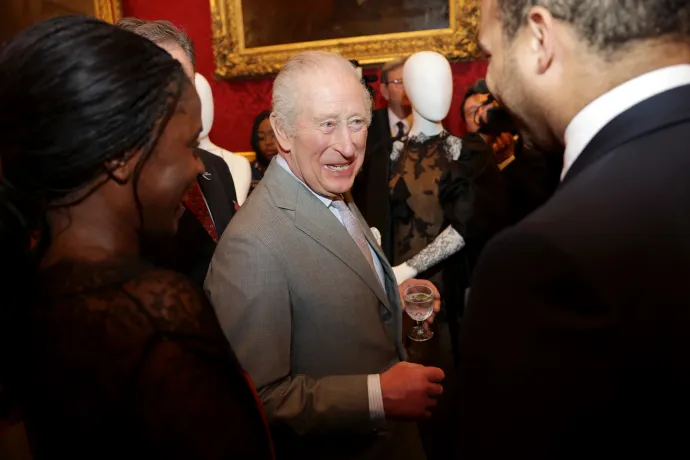
You have kindly come to St. James’s Palace to-day to share and discuss some of the latest developments in tackling these issues, and I wanted to thank, in particular, Tony Hayward, Stephen Green and David Blood for giving up some of their precious time to speak to us, as well as all of you who are very kindly presenting to the seminars in more detail during the rest of the day.
I know that the problems we face seem almost insurmountable and that it is very difficult for all of us to find the right balance between the short-term expectations of customers and investors and the actions needed to assure long-term continuity and success. I believe that this Project is a vital component in helping to provide the tools and information needed to find this balance and to ensure our children and grandchildren are not locked into a world with no future whatsoever.
As Dante observed “The darkest places in hell are reserved for those who maintain their neutrality in times of moral crisis”. This is no time for inaction while we wait for further evidence that we are in fact testing the world to destruction – a conventional outlook that is now entirely unfit for purpose in the 21st Century. It is no time either to wait for others to take the lead. I very much hope and believe that this Project and your discussions today will be an important and practical step in addressing the immense challenges which confront us.