I am sure that all of you here today will support the establishment of this “International Connected Reporting Committee” and I should be so grateful for any assistance that you can give in taking the proposal forward.
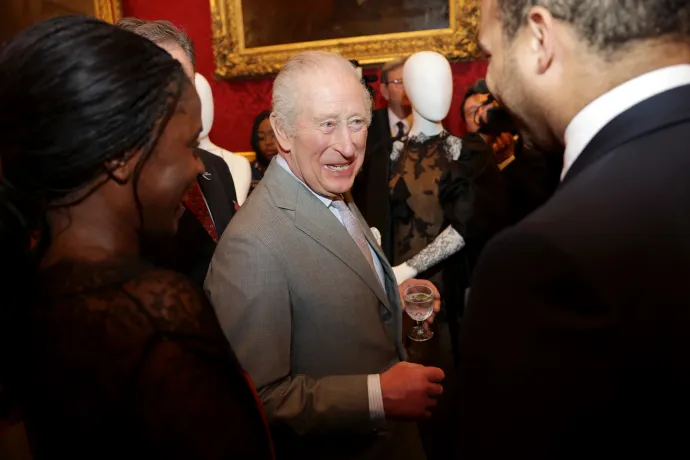
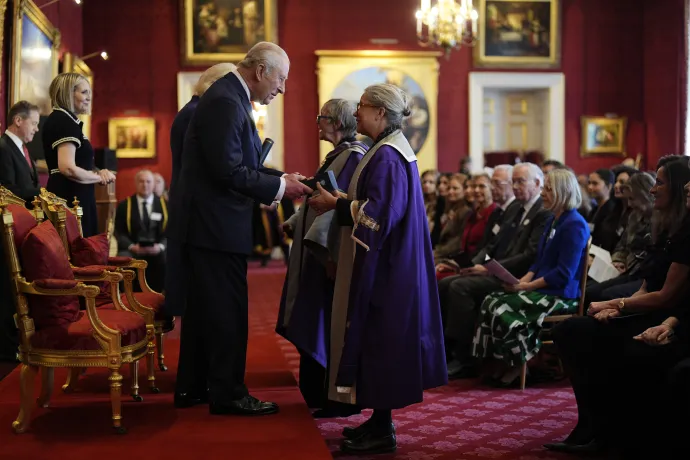
Ladies and gentlemen, it is a great pleasure to welcome you to St James’s Palace and to what is, in effect, the fourth annual general meeting of my Accounting for Sustainability Project - although you may not have realized it!
If I may say so, I am delighted to be able to report that the Project, from small beginnings, seems to go from strength to strength - as evidenced, apart from anything else, by the number of you who have very kindly spared the time from your extremely busy lives to be here today, in some cases travelling from as far away as China, Japan, the United States, Australia and goodness knows where else. I could not be more grateful to you.
There are, perhaps, two main reasons for the Project’s continuing success. Firstly, the interest and commitment of all of you, for which I am hugely grateful; and, secondly, our increasing awareness of the critical and vast sustainability challenge that confronts us.
Earlier this week, from some extraordinary reason, I was invited to speak at the U.N. Climate Change Conference in Copenhagen and, as I said there, the grim reality is that the experts have concluded that our planet – our only planet and the one, after all, on which we totally depend – has reached a point of crisis. They are convinced that we have only seven years left before we lose the levers of control. As the President of Gabon said at a meeting I hosted here at St. James’s Palace last month “the door to our future is closing”.
If unchecked, climate change and the rapidly increasing destruction of the Earth’s ecosystems, upon which we are dependent for vital materials and sustenance, will dwarf our current financial difficulties, resulting in hundreds of millions of environmental refugees, lack of water and uncertain production of food, the increasing spread of disease and, of course, growing social instability; all of which will affect the well-being of every man, woman and child on our planet.
So, surely, we have to ask ourselves with ever increasing urgency whether it is entirely sensible to wait until we have tested the World to destruction, in the ultimate of empirical, double blind trials, before acting on the many observable signs of ecosystem and climatic dysfunction?
You know better than I ladies and gentlemen the finance and accounting community is the engine room of our economy and, indeed, of society as a whole and, if I may say so, you have a particularly important and central role to play in addressing these challenges. I personally am just a humble historian, rather than an accountant or an economist - which has probably become apparent by now! - but nevertheless I am going to be brave – or foolish - enough to mention one or two ways in which you might fulfil this crucial role.
We are, in many ways, like people who have inherited a great fortune, in our case from Nature - coal and oil reserves, life-giving rivers and aquifers, great tropical forests which regulate our atmosphere and provide rainfall, rich farm land and an astonishing array of biodiversity. Unfortunately, however, and as is sometimes the case with people who inherit a great fortune, we seem intent on spending it at an alarming rate; intent on consuming these priceless assets which have been created and built up over, literally, billions of years, in a matter of twenty or thirty decades. In particular, we seem to have lost the understanding that if Mankind is to survive we need to live within the limits and as a part of Nature, rather than apart from her, seeing and using Nature as an entirely expendable resource for our exploitation.
Ladies and gentlemen, I really don’t want to sound melodramatic, but I, and many others, are increasingly concerned that if Mankind is to prosper – not only to maintain our lifestyle in the developed world, but also to ensure that those in the developing world have a more fulfilling standard of living – there has to be what amounts to a sustainability revolution. Revolution is a strong word, but I am ever more convinced that there is no other way to describe fully the fundamental shifts in our way of life and economy that are required to tackle climate change, over -consumption of finite natural resources and the rapidly increasing destruction of the Earth’s ecosystems.
The sustainability revolution will, in fact, be an opportunity just as much as a threat. It can be an investment with a return rather than a tax; a reassessment and realignment, not through imposition and dictum, but through interchange and discussion which, as John Stuart Mill observed, shape our values and are at the heart of civilization.
The need to look afresh at our economic model lies at the heart of this revolution and is I would suggest the next logical step from accounting for sustainability. Our current model of progress was not, of course, designed to cause climate change and the destruction of the Earth’s ecosystems. It made good sense - to politicians, economists and accountants alike - because the objective was to improve the well-being of as many people as possible. However, given the overwhelming evidence from so many quarters, we now surely have to ask whether our economic model still makes sense under the circumstances in which we now find ourselves.
Now, I am not the best person to suggest how a new approach to economics might be structured and operate – the speakers following me are far better qualified! – but it seems to me self-evident that we cannot have capitalism without capital and, very importantly, that the ultimate source of all economic capital is Nature’s capital. In other words, we need to remember that the health and stability of our economy are dependent, at the end of the day, on the health and stability of both the natural environment and the communities of people living within it and not the other way round.
I was told at the end of last month by one of this country’s leading economists that one of the most significant failures of twentieth century economics was to stop including land, and Nature generally, as a productive resource in economic thinking and models.
Not valuing Nature and our environment has been an error of ethics as well as economics, for which we are paying now and will pay much more dearly in future unless urgent action is taken. If we are to survive and prosper in the long-term, we must learn to live within Nature’s limits and to re-orientate our economic model from unconstrained growth to sustainable growth.
I should add that this is not just about saving the planet and ensuring our children and grandchildren have some sort of future, but about taking practical decisions that make sense for businesses. As C.K. Prahalad, the distinguished Professor of Strategy at the University of Michigan School of Business, said in the Harvard Business Review: “The quest for sustainability is already starting to transform the competitive landscape, which will force companies to change the way they think about products, technologies, processes and business models.”
The sustainability revolution will, hopefully, be the third major social and economic turning point in human history, following the Neolithic Revolution - moving from hunter-gathering to farming - and the Industrial Revolution. I am afraid to say that companies and other organizations which fail to recognize and respond to changing circumstances as we move towards a low carbon economy will in all likelihood be left behind. As we stand at present, our way of looking at the world, our pricing, decision-making and reporting systems and our technological efficiency have not kept pace with global consumption and unless we re-orientate ourselves rapidly and catch-up the future is bleak indeed.
Now, at this point in the proceedings all the convinced sceptics, and those requiring cast-iron evidence of this bleakness, are only too welcome to depart as, otherwise, you will be driven mad by what follows!
I established my Accounting for Sustainability Project, over five years ago now, to help ensure that sustainability – in other words considering what we do not only in terms of ourselves and today, but also of others and tomorrow - is not just talked and worried about, but becomes embedded in the “DNA” of countless organizations.
The Project has been working to develop practical tools and guidance to help ensure that we are not battling to meet twenty-first century challenges with, at best, twentieth century decision-making and reporting systems. It has been doing this, firstly, by suggesting how sustainability can be taken into account more effectively in day-to-day operations and, secondly, by developing a reporting framework that shows the connection – or, probably at the moment in most cases, the disconnection – between the strategy that an organization is pursuing and its sustainability impacts.
I know that one of the most difficult issues that most of you face is to find the right balance between, on the one hand, the short-term actions needed to enhance profitability and shareholder value and, on the other, the longer-term actions needed to ensure continuing success and profitability in the face of the sustainability revolution. Finding the right balance between these often conflicting priorities is not easy and the new approaches which my Project is developing are, put briefly, to help address this issue.
I really am enormously heartened that, by committing to my Project’s five principles, accounting bodies around the world, including our new Accounting for Sustainability Forum members from Japan, Germany and Australia, have recognized formally that sustainability is an issue which they need to address. For those of you who have not seen the five principles, they are as follows:- promoting better accounting for sustainability; embedding accounting for sustainability within the signatories’ own organizations; increasing understanding of good sustainability practice; sharing learning and experience; and, perhaps most importantly, incorporating accounting for sustainability within training and professional education.
I am also very pleased that an increasing number of organizations are using the Project’s Connected Reporting Framework in their Annual Reports to present a more balanced, complete and connected picture of their impacts and performance.
Rumour reached me recently that officials in The Queen’s Household were slightly taken aback, when they received recent Treasury guidance on the inclusion of sustainability information in annual reports, to read that it was based on my Project’s Connected Reporting Framework! However, not only is the Connected Reporting Framework due to be adopted by Her Majesty’s Government, but it is also being used by Aviva, BT, BP, EDF Energy, Hammerson, HSBC, Northern Foods and an increasing number of other organizations. To help and encourage this process, the Project Team, with input from over fifty companies, investors and academics, has prepared practical guidance on how the ‘connected reporting’ concept can be applied. A copy of this guidance, which includes examples for the water, food retailing and property investment sectors, is available for you to take away after this session and is also on the Project’s website.
With respect to embedding sustainability in organizations’ DNA, a group of academics has undertaken research into how sustainability considerations have been taken into account in day-to-day decision-making by eight private and public sector organizations. The research focused in particular on the challenges the organizations faced and on how, and how successfully, these challenges were overcome. A short summary of the key findings from this research is also available today, with the case studies to be set out in full in a book, “Accounting for Sustainability: Practical Insights”, to be published next year – a little light bed time reading!
Ladies and gentlemen, the key question then is where do we go from here? What is clear to me, and I am sure to all of you, is that we must work together to address these issues at a global level. There are a large number of organizations active in this area – including my Accounting for Sustainability Project, the Global Reporting Initiative, the World Business Council for Sustainable Development, the Commission established by President Sarkozy, the International Corporate Governance Network and others. In order to achieve a uniform global approach, we need to bring together all this, at present, somewhat fragmented and disconnected expertise and thinking. It has taken over one hundred years for financial accounting and reporting to be standardized on something approaching an internationally consistent basis. I am afraid we simply cannot afford to take even five percent of this time to do the same for sustainability accounting and reporting.
In September this year my Accounting for Sustainability Project and the Global Reporting Initiative convened a meeting of investors, standard-setters, companies, accounting bodies and UN representatives. The purpose was to discuss the need to create this internationally consistent approach to connected financial and sustainability reporting. At the meeting, the group agreed that an international body should be established, bringing together organizations with responsibility for financial accounting and reporting with those that are widely recognized as leaders in sustainability and other non-financial reporting, in order to create an internationally - accepted connected reporting framework.
I am sure that all of you here today will support the establishment of this “International Connected Reporting Committee” and I should be so grateful for any assistance that you can give in taking the proposal forward. We have explained the need for a more co-ordinated international approach and set out next steps in a short briefing paper, which is the third, and you will be pleased to know final, document that we have available for you to take away today.
Ladies and gentlemen, if we are to avoid the potentially catastrophic consequences of climate change and of over-consumption of finite natural resources then we cannot afford further delay. We must act now. The important thing to remember is that the situation which confronts us is not only a threat, but, as I said earlier, an opportunity – an opportunity to make a real difference for the better in the way we see the world, live our lives and shape our economies. In other words, a chance to create a virtuous rather than the vicious circles we tend to have at present. And as I have said, the accounting and finance community has a vital role to play in providing us with the systems and information to make the right decisions and choices, and I am delighted and very grateful indeed that our three distinguished speakers, Professor Tim Jackson, Lord Sharman and Professor Mervyn King, have been able to find time in their busy schedules to be with us today and to share their thoughts about how this can be done.
Looking ahead, I very much doubt that historians and our children and grandchildren will care whether, in these early decades of the twenty-first century, we managed to sustain twentieth century-style economic growth. What they will be far more concerned about I suspect is the state of the Earth’s climate, resources and eco-systems that they inherit from us and whether the planet can continue to provide them with sufficient food, water, standards of living and stability. Ensuring that we leave a fair and proper legacy seems to me to be not only our most urgent priority, but also our greatest duty.