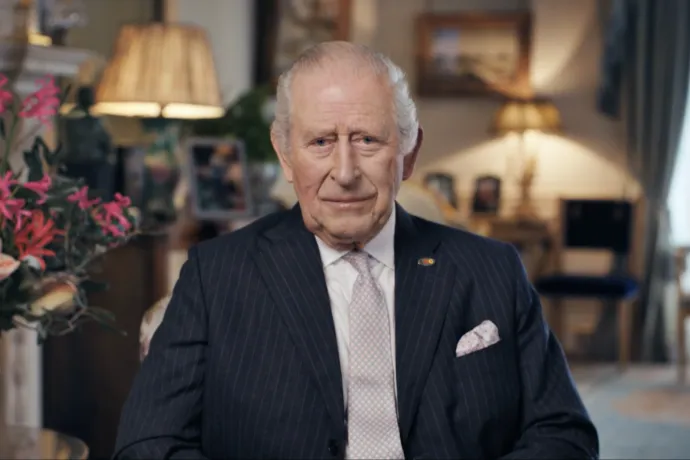
Your Excellencies, Ladies and Gentlemen, I hope I am in the right room as this is quite the biggest venue I have ever had to negotiate!
I was enormously touched and flattered to be invited to join you today for this extremely important meeting on forests in the context of the Lima Paris Action Agenda. Perhaps, at this point, I could take the opportunity to pay tribute to the L.P.A.A. Quartet – Peru, France, the Office of the U.N. Secretary General and the U.N.F.C.C.C. – for all their heroic efforts to deliver action on the Agenda? And to offer my thanks, too, to Minister Pulgar-Vidal and his team for their incredibly hard work in coordinating this session, as well as to all of the partners and organizations involved and represented here today…
As some of you may perhaps know, for many years I have been deeply concerned about the fate of the world's forests, which was why, in 2007, I established my Prince’s Rainforest Project, now my International Sustainability Unit, to try and create a major partnership between the private , public and N.G.O. sectors to tackle this issue before it is all too late.
Many steps have been taken in the past decade to protect forests and, as will become evident this morning, there is some heartening progress to report across a broad sweep of work. Notwithstanding the many praiseworthy achievements, I earnestly hope that the hours ahead will also see the announcement of new ambitious initiatives and partnerships, across sectors, communities and regions. Accelerated action – to reduce deforestation and degradation, and to restore forests– is needed now more than ever.
Mahatma Gandhi once memorably wrote: "What we are doing to the forests of the world is but a mirror reflection of what we are doing to ourselves and to one another". How right he was, and how pertinent this remark continues to be in 2015: for, despite all our efforts, we continue to deplete the forests of the world, with profoundly negative consequences for our wellbeing and for the planet at large, including – most importantly on the occasion of C.O.P. 21 – its climate.
Yesterday, I was heartened to see the statement by political leaders on the importance of forests and their announcement of ongoing domestic action and international support for forest conservation efforts around the world. That forests should be featuring so prominently at the outset of the C.O.P. is, I hope, an encouragement for all of the governments, organizations and communities present today.
Now, I very much doubt that in a room entirely filled with so many international forest experts and policy- makers that you need me to set out the importance of forests on so many fronts, whether climatic, cultural, intrinsic or biological! Suffice it to say that scientific advances are continuing to increase our understanding of the critical contribution forests make to all our lives; as well as, of course, adding to a sense of the deep peril we will encounter should their destruction continue and, perversely, we go on literally testing the world to destruction.
And so I thought instead that I would focus my remarks at the outset of your session on three, I hope, practical ways in which I believe we can make a positive difference to the fate of the world's forests and climate in the years ahead.
The first is on the issue of forest peoples and indigenous peoples. I am so glad that forest communities are represented here today. I believe first and foremost that we must do all that we can to support the communities that live within forests, or alongside them, to continue to protect and cherish those forests over time. For indigenous peoples, this is a question of the proper safeguarding of their reserves, traditions and cultures; for forest peoples more generally, a question of good governance, institutions, land tenure reform, adequate support and extension services. All our efforts should in the first instance be guided by the people whose lives are so much more intimately intertwined with the forests than our own; and that the approaches we take should both recognize and protect their rights, and draw on their wisdom, their perspectives and, of course, their hopes for the future. I think we should all acknowledge and salute the work, over several decades, of many present today in this direction, including community leaders, who have done so much to ensure that the voices of the indigenous and forest peoples have not been silenced and lost.
My second reflection concerns the transformation of global commodity supply chains. Encouraging though the progress made to date has been, it remains the case that many of the world's largest companies – and their financial backers – pay scant, by which I really mean no, attention to the deforestation footprint of their supply chains. Unsurprisingly perhaps, this is especially true in markets where there is limited consumer pressure to do the right thing. It seems that the vital role forests play in generating and regulating the rainfall upon which agriculture and food security depend is of itself insufficient incentive to act responsibly. I would therefore encourage you all to redouble your efforts, emboldened by the early successes achieved by some of the pioneer companies in this area, to enable this shift in global markets to happen. Stopping deforestation has to become the goal to which all commodity companies are committed, with 'zero net deforestation' becoming the norm, rather than the exception. In this respect, I would like to thank Paul Polman, the C.E.O. of Unilever, who has done so much to galvanize his peers and colleagues in the sector.
And, thirdly, I hope we might all act further in the years ahead to bring about, at a large scale, the kinds of sensitively conducted and ecologically resilient forest landscape restoration that the world so urgently needs to see. Given that we have managed to reduce the world’s tropical forests so significantly over recent decades (with over 500 million hectares lost since 1950), the restoration of forests and forests landscapes should not be an afterthought – but instead, surely, an equal priority to halting deforestation and degradation. As all the horrors of even a two degree warmer world bite – and bite they will – we are going to need a lot more forest, not a slight reduction in the existing rate of attrition!
All of this is brought sharply into focus by the recent science which tells us that as much as a third of climate change mitigation can come from forests and the land use sector more broadly. In light of this, the increased attention given to forest protection and restoration over the last few years is, of course, to be hugely welcomed. But in recognizing that the true value of this critical Paris conference is what happens afterwards, there is perhaps an argument that international processes could, in coming years, give even greater consideration to the role of forests and land use in both climate change mitigation and adaptation.
For each of these pillars of work, and all the others to be discussed today – such as the vital issue of protected areas, another cause close to my heart – there will need to be political will and leadership at the highest level, as Izabella Teixeira, the Brazilian Minister of Environment, communicated so forcefully and articulately at a meeting on forests I hosted in London at the end of October - and incidentally I am so pleased to hear that this meeting contributed to the momentum of today's discussions.
With political will and leadership – spurred on in turn by further leadership from the private sector and from civil society – everything becomes possible, as Brazil and others are beginning to show. In fact, as you all know, it is only with bold commitments, leadership, cooperation and tenacity that it will be possible to safeguard the world’s forests, without which, Ladies and Gentlemen, we have no future, or certainly not one that we would wish to inhabit.
This, therefore, really is a critical session. On such a vital subject, there can be no room for failure. It is very simple: we must save our forests, for there is no Plan B to tackle climate change or many of the other critical challenges that face humanity without them. And you, Ladies and Gentlemen, are the people who can lead the world in this vital endeavour. I can only hope, and pray, for your every possible success today and in the years ahead.