A speech by HRH The Prince of Wales introduces the 2003 President’s Lecture, given by The Bishop of London, Richard Chartres
Published
The response to The King’s Fund publication was quite staggering and as a result I am pleased today to announce that we have been able to establish a new two-part research and development programme.
Ladies and Gentlemen, I'm so glad to be able to welcome you here today for the President's Lecture for the King’s Fund. I don’t know why I’m always asked to give this introduction because all it is, is a temptation to give the lecture in advance of the lecture for which I apologise! I like to think the topics of all five previous lectures have been of enormous importance but none has had quite, I think, the universal relevance of this year’s.
Talking about death is still something of a taboo and in many ways, I suppose, this is understandable. For a start, it is something of an affront to our apparent mastery of Nature and our technological ingenuity. Talking about death is an acknowledgement of our ultimate frailty in a world of increasing convenience. Talking about what it actually means can also be taboo in today’s materialistic environment. So what is death? Is it extinction or is it transition? Is consciousness merely a by-product of brain processes? Scientific materialism maintains this view denying the existence of the soul, hence death can only be extinction. The Christian view is the resurrection of the body, the spiritual body, not the flesh, according to St Paul. The Greek view (incorporated by Christian Platonists) was of the immortality of the soul linked in various ways to the Indian view of the cycle of rebirth and reincarnation.
What then does the available evidence – and there’s a great deal of it – from near-death experience tell us? Latest studies are based on a prospective study on cardiac arrest patients in an article by Dr Pim van Lommel, a Dutch cardiologist in The Lancet. Out of 324 patients, 18 per cent had a near-death experience. The important point is that whatever position modern science may take on near-death experience, the subjects themselves are a) convinced of survival of death when they come back and b) they are transformed towards the valuing of love and the pursuit of wisdom. Such near-death experiences conflict with established materialist thinking that the mind is a product of brain processes, that the universe is an accident – the outcome of chance and necessity whereby life has no larger context and meaning, no creative intelligence, no transcendent love. In terms of near-death experience, the inner experience of the loving light is a living reality whereby the inner spiritual view confers meaning and gives us a deeper perspective of life. It is true, I think, that ironically – and I’ve met quite a lot of patients who say this – life-threatening illness may cause us to re-examine the very premises on which we have based our lives, perhaps freeing ourselves to live more fully for the first time.
So when we talk of dying peacefully or “healthy dying”, I do wonder whether such a thing is possible for most of us? Perhaps to die peacefully requires a certain acceptance of one’s own shortcomings. Perhaps a peaceful death, if a large part of your life has been spent in a state of agitation, stress and possibly anger, is harder to achieve?
It would seem, from the evidence provided by the near-death experience, that it is, in fact, all about the light of love and compassion in the first place. (“Lighten our darkness, we beseech thee, O Lord” as the Evening Collect in the Prayer Book reminds us.)
It has been said that we are born broken, we live by mending and the Grace of God is the glue; when we are perfectly better, perhaps whole, we die – it is the paradox of dying! Healthy dying must therefore show an understanding of the need for change and transformation.
Ladies & Gentlemen, I am very pleased that the King’s Fund has been aware of a growing need for new thinking and development to ensure that a “good death” is the norm rather than the exception. Last year, the Fund published a discussion paper on death and dying. It revealed that while most people would prefer to die in the comfort and security of their own home, only about a quarter are able to do so. Looking at it another way, it has been estimated that almost a quarter of hospital-bed-days are used by patients in their last year of life. And this is only one aspect. While tremendous progress has been made in physical symptom-control, for people suffering from life-limiting diseases, much less progress has been made in provision of practical and emotional problems, particularly for patients who do not have access to specialist palliative care service – and this is by far the majority, especially for people dying from conditions other than cancer.
The response to The King’s Fund publication was quite staggering and as a result I am pleased today to announce that we have been able to establish a new two-part research and development programme. So through a £50,000 grant to Guy’s, King’s and St. Thomas’ School of Medicine we have embarked on a two-year project to build the capacity of Primary Care Trusts in London to commission high quality palliative care that reduces inequalities.
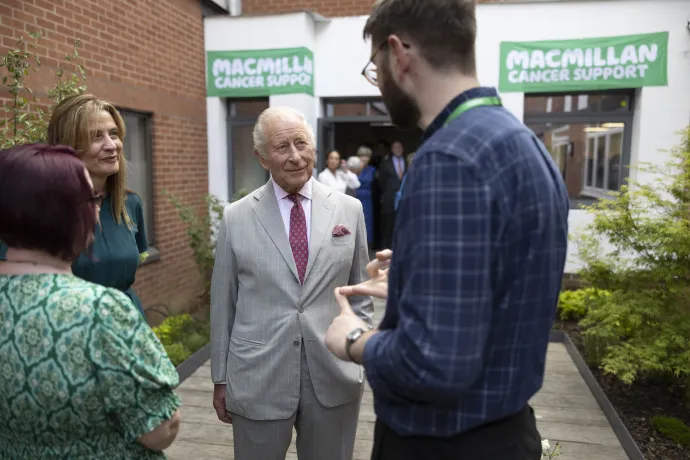
Well, Ladies & Gentlemen, there are of course lots of wonderful examples of work to support the dying; well-known organisations such as Macmillon Cancer Relief, of which I am Patron, the Motor Neurone Disease Association and Marie Curie Cancer Care – another organisation of which I am Patron. But also, other less well known ones, the Befriending Network, which I understand is represented here today, a charity funded by a variety of sources, including The King’s Fund, pairs people with life-threatening illnesses with volunteers offering emotional and practical support in the home.
And here, I return to my original point – that perhaps we can learn and take heart from the intimations of a transformative inner evolution through the process of dying provided by the evidence from near-death experience. Perhaps, too, that remarkable Chinese sage, Lieh Tsze (a disciple of Lao Tsze) offered a profound insight into this entire process when he wrote a long time ago, that “There are those who aspire to shut out death; There are those who wish to limit their bodily life; Both are deceived. The formal element in man pertains to heaven; The bodily frame of man pertains to Earth. That which belongs to Heaven is pure and tenuous; That which belongs to Earth is turbid and dense. When the Soul departs from the body, each returns whence it came to its real abode: The body returns to that from which it sprang; The soul returns through the gate from which is emerged”.
Whatever the case Ladies & Gentlemen, I am sure our guest lecturer, The Bishop of London, Richard Chartres, who has contributed so greatly to ethical and moral thinking in a whole variety of areas over the last 30 years since his ordination – and I remember him at Cambridge before he was ordained – will offer us a far more profound and enlightened insight into “Healthy Living, Healthy Dying” than I would clearly ever be able to do…
Related content
Remarks by The King at 'A King's Trust Celebration' at the Royal Albert Hall
You'll all make a huge difference to this country and many others.
A speech by His Majesty The King at the White House State Dinner, Washington
Tonight, we are here to renew an indispensable alliance which has long been a cornerstone of prosperity and security for both British and American citizens. Our people have...

The King's Commonwealth Day Message 2026
Working together, we can ensure that the Commonwealth continues to stand as a force for good – grounded in community, committed to the kind of restorative sustainability that...
A message from The King on the death of Reverend Jesse Jackson
My wife and I were deeply saddened to hear of the death of the Reverend Jesse Jackson. We send our deepest sympathy to his family. I remember with great fondness meeting him...
A message from The King ahead of a reception at Windsor Castle to celebrate carers
So to those who provide care - whether you wear a uniform or simply the clothes you felt able to pull on in the morning - please know that the great love you show in small...
A message from The King, following the attack at Tumbler Ridge Secondary School in British Columbia
My wife and I were profoundly shocked and saddened to learn of the most dreadful attack at Tumbler Ridge Secondary School in British Columbia. We can only express our deepest...
Announcement of a State Visit by the President of the Federal Republic of Nigeria
A speech by His Majesty The King at the Lord High Admiral’s Divisions Parade, Britannia Royal Naval College, Dartmouth
My own service taught me that leadership is not about rank; it is, and has always been, about character. It is about making sound decisions under pressure, holding firm to our...
A message from The King in support of Stand Up To Cancer
Throughout my own cancer journey, I have been profoundly moved by what I can only call the 'community of care' that surrounds every cancer patient - the specialists, the...
State Visit by The President of The Federal Republic of Germany and Ms. Büdenbender
03 December 2025
A message from The King to the people of South and Southeast Asia following devastating floods across the region.
My wife and I are deeply saddened to learn of the devastation caused by the terrible storms across South and Southeast Asia. We can only begin to imagine the scale of...
A message from The King to the people of Hong Kong following the devastating fire in Tai Po.
My wife and I were greatly saddened to learn of the devastating fire in Tai Po and feel deeply for the people of Hong Kong at such a tragic time. Our most heartfelt thoughts...
A message of condolence from His Majesty The King following the passing of Manfred Goldberg, Holocaust survivor and educator.
My wife and I were most deeply saddened to hear the news of Manfred Goldberg’s recent death and, together with everyone present, mourn his great loss in our hearts and souls...
A message from The King to the people of Jamaica and all those across the Caribbean affected by Hurricane Melissa
My wife and I have been deeply concerned and profoundly saddened to see the catastrophic damage caused by the ferocity of Hurricane Melissa in Jamaica and across the Caribbean...