I cannot put it more eloquently or succinctly than the Japanese proverb: “What is now most needed is action rather than words”.
Ladies and Gentlemen, Konnichi-wa.
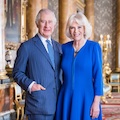
It is a great pleasure to return to Japan, almost exactly eighteen years since my last visit, in 1990, for the Enthronement of Their Majesties The Emperor and Empress. On this occasion I am able to bring my wife for her first visit to this remarkable country and for another highly auspicious celebration - the 150th anniversary of diplomatic relations between Japan and Britain.
In 1858 our two island nations were in a state of transition. Here, Japan was entering the modern era. In Victorian Britain, the full effects of the Industrial Revolution were beginning to be felt: technological and economic progress were gaining momentum with the development of steam-powered ships and railways. The extraordinary technological and economic advances that marked that period of Britain’s history were, in many ways, similar to those which marked Japan’s rapid growth in the second half of the twentieth century - and saw your economy become the second largest in the World. These common experiences, albeit at different times in our history, provide the basis for our modern partnership.
Since the tentative beginnings of trade between our two countries 150 years ago, we have developed close links in almost all walks of life. Trade continues to be hugely important. But it is no longer the whole story. Japanese investment in the UK is, in many ways, the huge success of the past forty years. A staggering 1,400 Japanese companies now invest in Britain, employing an equally staggering 95,000 people. Educational ties have also grown exponentially and there are, of course, close links between my own family and the Imperial Family, including many visits. Indeed, I myself first came to Japan in, would you believe it, 1970 for Expo - well before the majority of visitors to the splendid Miraikan Museum were born!
These exchanges, at all levels, have improved our understanding of each other and, crucially, strengthened our common values. Through our membership of the G8, to name but one group in which we both play a leading role, we are now truly partners in all areas of international concern, from tackling environmental issues to tackling poverty and combatting conflict and instability around the world.
The British Embassy, together with the British Council, of which I have been Vice-Patron for twenty-four years, have organized a year-long programme of events called “UK-Japan 2008” to mark this important 150th anniversary. It highlights a balance between pioneering innovation and preserving the best of what we have been bequeathed in the creative industries, science and the arts. When my wife and I visit some of the splendours of Nara tomorrow, we shall see for ourselves how timeless principles have informed Japanese building – and, indeed, Japanese consciousness - from the eighth century. We shall also see how the conservation of these magnificent buildings and the traditional wisdom they represent is as precious to you today as it was more than a thousand years ago.
Traditional wisdom should remind us of the urgent need to rediscover an understanding of our inter-connectedness with Nature. I believe that our ability to work innovatively and creatively, going beyond “business as usual”, is now a critical imperative for both our countries and, indeed, the planet as a whole. Why? Because it is not an exaggeration to say that we face the biggest challenge our planet has ever seen – literally a battle for survival. I am talking, of course, about climate change. Given the current turbulence in the international financial system and the immediate and damaging effect it is having on the whole world, the “credit crunch” is rightly a preoccupation of vast significance and importance. But, Ladies and Gentlemen, we take our eye off the “climate crunch” at our peril. While we hope and pray that the underlying strengths of the global economy will – once again – enable it to bounce back, the effects of climate change will be far from temporary and will, indeed, be irreversible…
It is no exaggeration to say that the world owes Japan the greatest possible debt of gratitude for having hosted the breakthrough climate conference in Kyoto in 1997, which resulted in the first international agreement on targets for greenhouse gas emissions. But, as we all know, much more now needs to be done – despite the siren calls of those who claim that the science of climate change is erroneous. For those who believe this – and there seem to be a large number of them – I recommend a visit to the British Antarctic Survey in Cambridge, where ice-core samples over the past 750,000 years provide ample evidence of man’s contribution to the crisis facing us.
In visiting the Miraikan today I have seen for myself yet more evidence of the devastating effects that climate change is having on our planet. At the end of this speech you will see a highly effective simulation of how our planet has already started - and will continue inexorably - to heat up, reminding us of the literally apocalyptic dangers which we face. One of the most alarming conclusions of recent scientific projections is the plausible prospect of a global average temperature increase of above six degrees by 2100 – a level unprecedented in human experience. It would cause changes of a magnitude which it is barely imaginable to contemplate. Sea levels would rise rendering uninhabitable low-lying areas where most people live today and would threaten the survival of coastal cities such as Tokyo, London and New York. With the melting of the Himalayan glaciers, three billion people living beside Asia’s major rivers – the Ganges, Yellow River and Yangtze – would face flooding and then water shortages.
Using the latest satellite imaging technology, our scientists are showing us very clearly how, as we continue to pump CO2 into the atmosphere, we are losing with terrifying speed those vital ecosystems – the great rainforests in the Amazon, in South East Asia and in central Africa – which act literally as the world’s lungs. I have seen for myself today the outstanding imagery produced by the Japanese Space Agency’s satellite systems ALOS and GOSAT, recording and demonstrating the rate of degradation around the world. The evidence is terrifying - over the last twenty years, an area three times the size of Japan has disappeared. Globally, we are destroying forests at the rate of 130,000 square kilometres each year – an area equivalent to Hokkaido and Kyushu put together – or the size of one football pitch every four seconds. And the loss of these extraordinary ecosystems is responsible for more greenhouse gas emissions than those of the whole global transport sector!
Ladies and Gentlemen, the scale of the challenge is clear – nothing less than an urgent, full-scale transformation to a low-carbon society is needed. But what does a ‘low-carbon society’ mean? For developed countries like the UK and Japan, it means a cut in current carbon emissions of seventy to eighty per cent by 2050. The economic case for action is clear: a UK/Japan joint project reported this year that the cost to Japan of reaching such a target would be approximately one per cent of GDP per year and much, much less than the five to twenty per cent reduction in global GDP by 2050 which economists predict if nothing is done to stabilize global warming.
The challenge embraces all sectors of society – government, business, science, civil society and private individuals. We all have our role to play. Here in Japan, and in a few days time in Indonesia and Brunei, I am greatly looking forward to meeting people who are expert in these areas and taking the opportunity to listen and learn about what is required of all of us. As we try to answer this difficult question, the two key themes in my mind are innovation and conservation.
Innovation because we will need ground-breaking, new technologies to help us solve the energy dilemma we are currently facing. Here, it is the role of business which is key. Business – and business R&D - is spearheading the low-carbon revolution. Tomorrow I will see some of Japan’s advances in key technologies, such as solar power, which offer the promise of carbon-free electricity. It is this ability and willingness of the private sector to think creatively that offers us all a great beacon of hope in these challenging times. It is why, in a small way, I have been championing responsible business and corporate social responsibility for nearly three decades. Under the auspices of Business in the Community, of which I have been President for 23 years, I started two years ago what we call a “May Day” network – based on the May Day emergency international distress call - which has become the country’s largest group of businesses and organizations committed to tackling climate change. By sharing best practice, these companies are playing a powerful role in reducing the UK's carbon emissions. Technological innovation is an area for which Japan is rightly famous. But innovation in business is not just about technology. Business must also innovate in its practices and in its attitudes, revisiting business models and looking for new opportunities, embracing rather than resisting the challenges of a shift to low-carbon. Indeed, I have long believed that business should play a key role in changing attitudes, working in partnership with policy-makers to develop the solutions we need. That is why, in 2004, I set up my Corporate Leaders Group on Climate Change with twenty of the top British companies which together promote the fact that the change to a low-carbon future presents business with an opportunity, not a threat. It seems to me that the current international financial difficulties serve only to reinforce the message that positive action to tackle climate change could in fact be a stimulant to economic activity. The idea of the UK Corporate Leaders Group network seems to have captured various people’s imagination and we now have a European Union Group delivering the same message of partnership to the Commission, Parliament and other Governments within the E.U.
This leads me on to conservation. In our rush for the new, we have forgotten how to look after what we already have – our natural environment. What is more, we are losing the traditional skills and crafts, the use of local materials and designs, which make each of our societies unique. We need to re-learn how to look after our natural heritage in the widest sense – including managing our forests, farmland and other habitats sustainably, or durably, in a way which promotes rich, varied biodiversity. During my visit, I will be looking at an example of a forest which has been restored to health through the joint efforts of people from the UK and Japan, reviving traditional skills of forest management and teaching a new generation of forest rangers. But as developed countries – and importers of natural resources, such as tropical timber, from developing countries - we must also think about our responsibilities to help these other countries preserve their natural heritage. We need to support the efforts of countries like Indonesia, which I am visiting next week, to monitor their forests and stamp out illegal logging by certifying – that is, putting an authorisation ‘stamp’ – on timber which has been felled and exported according to verified sustainable practices. And then we need to make sure our consumers and companies understand the imperative to buy 'legal' rather than illegal timber. But even this I hate to say is not enough. Given the current rate of destruction, we need to think more imaginatively about how to make sure that the preservation of our world’s natural forests – in other words a giant global utility essential to the planet’s future health – is properly valued.
This is something I am trying to do through my own Prince’s Rainforests Project, which is working to develop innovative public/private sector mechanisms to halt deforestation by making the rainforests worth more alive than dead. At the moment they are worth more dead than alive. It is, after all, our own patterns of consumption - for beef, for soya, palm oil and timber - in the developed world that are driving deforestation. We simply have to find a way to provide viable alternative income to these countries which does not depend on deforestation. This is what my Rainforests Project is hoping to do with its first draft proposals, to be published in the next few weeks.
Ladies and Gentlemen, I would like to end by reminding everyone here that the scientists tell us there is just the smallest window left for us to make the transformational changes in the way we live needed to stop catastrophic climate chaos. The worry, of course, is that this window of opportunity is available to us at exactly the same time as the global economy is under severe stress. But despite this we simply must not abandon the drive towards a low carbon economy. We have to act now because, as the British economist Lord Stern has told us, any difficulties which we face today will be as nothing compared to the ultimate effect which global warming will have on the world-wide economy and on the well-being of every man, woman and child on our planet if we continue on a business as usual basis. That’s the problem.
I cannot put it more eloquently or succinctly than the Japanese proverb: “What is now most needed is action rather than words”.
Because, as the thirty-second projection on the screen behind me will now show, the pace of global warming is truly alarming and doing nothing is simply not an option.
Thank you Ladies and Gentlemen.
Click here to visit The Prince's Rainforest Project website.