A speech by HRH The Prince of Wales at The Model, Sligo
Published
Mr. Flanagan, a daoine uaiseala [Ladies and gentlemen], I must just say, before going any further, what a treat it was to hear real Irish music - one cannot stop one's foot tapping - thank you to the composer, we will treasure this experience for the rest of our lives.
I cannot tell you what a joy it is for my wife and myself that we are able to be in Ireland once again. This is a country we both so love visiting, not least because of the wonderful warmth of the Irish welcome, failte.
As we have been reminded throughout this visit and do forgive my attempt at coining a new Seanfhocal Ní bhíonn strainseirí anseo ach carda nar aithíonn leat [There are no strangers here, only friends that you haven’t yet met]. For the ancient land of Ireland does have a remarkable tradition of cultural and spiritual creativity and it can be a powerful magic for some...
It is no surprise that it has inspired so many great writers, musicians and artists over the years.
Ladies and gentlemen, in the 150th anniversary of the birth of W. B. Yeats, there can be no more apt county to visit in Ireland than Sligo. This is where Yeats felt most at home; his “land of heart’s desire.” And it was places in Sligo like the Dooney Rock, Knocknarea Mountain and the islands of Lough Gill that prompted many of his most memorable poems.
Yeats’ poetry is widely studied in schools and universities throughout the United Kingdom. It is not a stretch to say that it is through Yeats’ work that many British people are first introduced to Ireland.
After all could you have a better guide than someone who, to quote from his citation for the Nobel Prize for literature, wrote “inspired poetry, which in a highly artistic form gives expression to the spirit of a whole nation”?
Ladies and gentlemen, relations between Britain and Ireland have changed hugely since my visits in 1995 and 2002. The Good Friday Agreement of 1998 and its successors have transformed for the better the political and security landscape across these islands.
Only last month, my son, Harry, and I were with the President and Mrs Higgins, and Mr Flanagan, in Turkey as we paid our respects to the soldiers who fought and died in the Gallipoli campaign.
Even by the dreadful standards of the First World War, the death toll and suffering were horrific. However, the bravery of the troops on all sides was extraordinary. Amongst them were over ten thousand Irishmen Connaught Rangers, Royal Dublin Fusiliers and Royal Munster Fusiliers and innumerable others fighting side by side. Tragically, over three and a half thousand Irish soldiers were killed and many more wounded at Gallipoli.
At the time, many Irish nationalists hoped that their participation in the First World War would bring together people of different traditions across these islands. Sadly, of course, it didn’t turn out that way. But a hundred years later, in remembering the scale of the suffering and sacrifice of that generation, we are at last finding common ground.
Working to end the conflict in Northern Ireland brought the two administrations in Dublin and London closely together.
My mother, The Queen’s, State Visit to Ireland four years ago and the President’s return state visit last year were further demonstrations of the historical change in our relationship.
The success of those visits is clear evidence of the maturity of our relations, which are now better than ever, based on mutual respect and friendly cooperation between two sovereign neighbours who share a huge amount in common.
We have shed our inhibitions about acknowledging the value that we bring to each other as trading partners, as places to find work, as sporting rivals and as contributors to a lively exchange of ideas and culture that enriches everyone. After all, the Irish have made a unique and important contribution to Britain a wonderful warmth of laughter, spontaneity and imagination.
Neither Ireland nor Britain enjoys such a deep and broad engagement with any other country. Our current, blessed era of friendship and cooperation is not, however, founded on pretending that the past did not happen. We all have regrets. As my mother said at Dublin Castle, “with the benefit of historical hindsight, we can all see things which we would wish had been done differently or not at all.”
I am only too deeply aware of the long history of suffering which Ireland has endured, not just in recent decades but over the course of its history. It is a history which, I know, has caused much pain and much resentment in a world of imperfect human beings where it is always too easy to over-generalize and to attribute blame.
At the end of the day, however, we should never forget that our acquaintance has been long; and we can turn that knowing into something new and creative. We need no longer be victims of our difficult history with each other. Without glossing over the pain of the past, we can, I believe, integrate our history and memory in order to reap their subtle harvest of possibility. Imagination, after all, is the mother of possibility. Let us, then, endeavour to become the subjects of our history and not its prisoners.
Ireland has had more than its fair share of turbulence and troubles. Those directly affected do not easily forget the pain. Recent years have shown us, though, that healing is possible even when the heartache continues.
In August 1979, my much-loved great uncle, Lord Mountbatten, was killed alongside his young grandson and my godson, Nicholas, and his friend, Paul Maxwell, and Nicholas’s grandmother, the Dowager Lady Brabourne.
At the time I could not imagine how we would come to terms with the anguish of such a deep loss since, for me, Lord Mountbatten represented the grandfather I never had. So it seemed as if the foundations of all that we held dear in life had been torn apart irreparably.
Through this dreadful experience, though, I now understand in a profound way the agonies borne by so many others in these islands, of whatever faith, denomination or political tradition.
Despite the tragedy of August 1979, the memories that Lord Mountbatten’s family have of Classiebawn Castle and Mullaghmore, going right back to 1946, are of great happiness. I look forward to seeing, at last, the place that he and they so loved and to meeting its inhabitants.
Many of them showed the most extraordinary outpouring of compassion and support to both Lord Mountbatten’s and Paul Maxwell’s families in the aftermath of the bombing. Their loving kindness has done much to aid the healing process.
A number of us will also gather in St. Columba’s Church at Drumcliffe, “under bare Benbulben’s head,” for an ecumenical service of peace and reconciliation. The poet Yeats, who is of course buried at Drumcliffe, once wrote:
“And I shall have some peace there, for peace comes dropping slow.”
As a grandfather now myself, I pray that his words can apply to all those who have been so hurt and scarred by the troubles of the past, so that all of us who inhabit these Atlantic islands may leave our grandchildren a legacy of lasting peace, forgiveness and friendship.
Related content
Remarks by The King at 'A King's Trust Celebration' at the Royal Albert Hall
You'll all make a huge difference to this country and many others.
A speech by His Majesty The King at the White House State Dinner, Washington
Tonight, we are here to renew an indispensable alliance which has long been a cornerstone of prosperity and security for both British and American citizens. Our people have...
The King's Commonwealth Day Message 2026
Working together, we can ensure that the Commonwealth continues to stand as a force for good – grounded in community, committed to the kind of restorative sustainability that...
A message from The King on the death of Reverend Jesse Jackson
My wife and I were deeply saddened to hear of the death of the Reverend Jesse Jackson. We send our deepest sympathy to his family. I remember with great fondness meeting him...

A message from The King ahead of a reception at Windsor Castle to celebrate carers
So to those who provide care - whether you wear a uniform or simply the clothes you felt able to pull on in the morning - please know that the great love you show in small...
A message from The King, following the attack at Tumbler Ridge Secondary School in British Columbia
My wife and I were profoundly shocked and saddened to learn of the most dreadful attack at Tumbler Ridge Secondary School in British Columbia. We can only express our deepest...
Announcement of a State Visit by the President of the Federal Republic of Nigeria
A speech by His Majesty The King at the Lord High Admiral’s Divisions Parade, Britannia Royal Naval College, Dartmouth
My own service taught me that leadership is not about rank; it is, and has always been, about character. It is about making sound decisions under pressure, holding firm to our...

A message from The King in support of Stand Up To Cancer
Throughout my own cancer journey, I have been profoundly moved by what I can only call the 'community of care' that surrounds every cancer patient - the specialists, the...
State Visit by The President of The Federal Republic of Germany and Ms. Büdenbender
03 December 2025
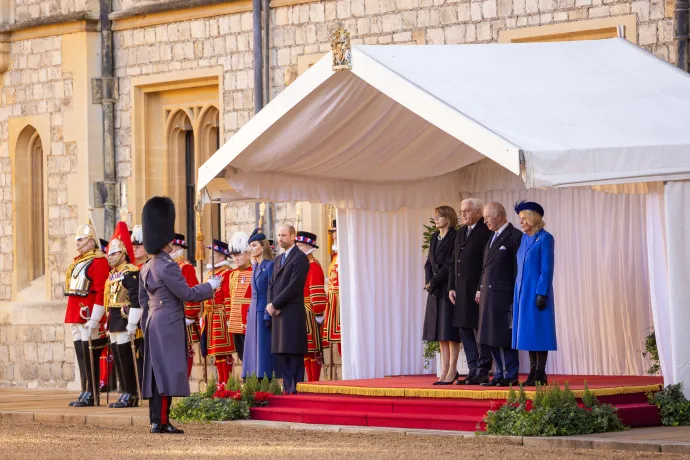
A message from The King to the people of South and Southeast Asia following devastating floods across the region.
My wife and I are deeply saddened to learn of the devastation caused by the terrible storms across South and Southeast Asia. We can only begin to imagine the scale of...
A message from The King to the people of Hong Kong following the devastating fire in Tai Po.
My wife and I were greatly saddened to learn of the devastating fire in Tai Po and feel deeply for the people of Hong Kong at such a tragic time. Our most heartfelt thoughts...

A message of condolence from His Majesty The King following the passing of Manfred Goldberg, Holocaust survivor and educator.
My wife and I were most deeply saddened to hear the news of Manfred Goldberg’s recent death and, together with everyone present, mourn his great loss in our hearts and souls...
A message from The King to the people of Jamaica and all those across the Caribbean affected by Hurricane Melissa
My wife and I have been deeply concerned and profoundly saddened to see the catastrophic damage caused by the ferocity of Hurricane Melissa in Jamaica and across the Caribbean...