The consequence of limiting or even extinguishing ambition is that we end up with an entire generation of culturally disinherited young people. With it, we give new generations a vision of the greatest.
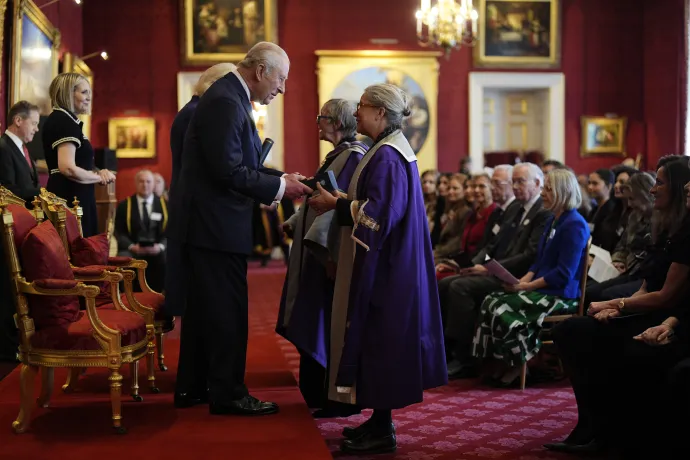
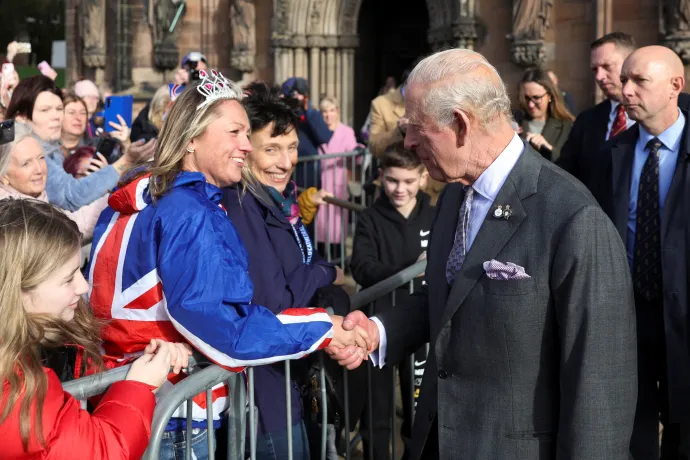
I am so pleased to have this, albeit brief, opportunity to meet as many of you as possible. As you know it is the third year.
Those who attended the earlier schools, first of all Dartington in Devon and then last year at Dunston Hall in Norfolk, seem to have found the experience professionally rewarding…
We have had a whole lot of comments from teachers - the most striking thing, I think, has been my rekindled confidence in the rightness of teaching quality Literature texts, attempting to lift the students to that level, rather than ‘dumbing down' to more accessible texts.”
Another one wrote: “Inspired by Seamus Heaney's huge reserve of poetry that he just knew by heart, I now regularly set homeworks that involve learning poems. The 7s really took to it and we have had lessons where we didn't need books because we knew the poems and my 10s are currently learning Keat's Belle Dame … and committed Othello's “It is the cause …” speech to memory.”
Bernice McCabe, the Director, to whom I am inordinately grateful for doing this for the third year running, and her Steering Group should take credit for the success of the last two events and for what I am sure will be a successful School this year.
Now, you may be wondering, or in fact you probably are why on earth I have involved myself in this initiative. Standing here I wonder whether I should say anything at all! But the answer is very simple.
From the outset, the main point about my Education Summer School has been that it exists to facilitate, to encourage and to inspire. It is not, I repeat not, about indoctrination. It is about making time for hard-pressed teachers (and I know what a difficult and challenging job they have because over the years I've heard various gatherings of teachers) to discuss fundamental questions about the nature of education and the contribution that their subjects can make to the intellectual and emotional development of young people in our schools. So it is about reminding people of some of the timeless principles underpinning teaching.
It is also, crucially, about reminding people of what has been lost throughout the twentieth century, and how we can recover a proper balance. I often think that the kind of fashionable changes we have witnessed in the field of education during the last fifty years have been mirrored in other areas of life – in particular with regard to agriculture and the environment, architecture and certain aspects of healthcare.
In all cases there has been a dramatic move from what I can only describe as an “organic” approach – in other words, something which has its roots in what has gone before and is, to all intents and purposes, a living organism reflecting the fundamental nature of our own humanity – to a “genetically modified” approach which cuts us off from all our cultural and historical heritage and relies on ceaseless, “clinical” experimentation. It is strange isn't it, I think, that the twentieth – and now it seems the twenty-first century – mindset seems to want to genetically engineer everything; to cut all roots: to homogenize, synthesize and globalize, when I think what we urgently need to do once again is to harmonize.
There is not enough time to go into a great deal of detail here, but I believe there is a good analogy, as far as what has happened within the Educational establishment is concerned, with what has occurred in the agricultural sector. In this case we have witnessed the comprehensive destruction of so much of our precious countryside.
And during the twentieth century we have seen the uprooting of hundreds of miles of hedges, we have lost over half our ancient woodland, ninety per cent of our chalk downland, and our traditional hay meadows have been reduced to just two per cent of their original area. All this destruction – which, ironically, everyone is now concerned to try and restore (along with more natural, safer methods of producing our food) – came about as farmers responded to clear economic signals and the advice and encouragement of the experts and academics. The farmers got the blame for what happened but, in truth, they were merely responding to official encouragement and incentive.
In the field of education I would contend that we have witnessed a similar destruction of our cultural, linguistic and historical habitat since the Second World War, again encouraged by the fashionable ideas of experts and educationists, which has meant that many people have become culturally disinherited.
I know from my visits to schools that much wonderful work is achieved, often in the most difficult and demoralising circumstances. I know, too, from my conversations with teachers (not least during the Dartington and Norfolk summer schools), that many in the profession feel that a difficult job is becoming, year by year, yet more difficult.
It must be hard to keep order, although I dare say many of you here are very good at it, when your pupils apparently have little fear of the sanctions you can impose, when some of their parents collude to undermine your authority, when we live in a society where the very notion of ‘authority' is routinely criticized. It must be hard to teach with energy and commitment when the burden of bureaucracy means that you have to spend hours in the evening and at weekends to keep on top of the paperwork; when the curriculum is in a state of constant flux; public examinations are for ever being re-structured; one initiative follows with painful rapidity on the heels of the last.
And we live, of course, in a materialistic world which does not (how shall I put it?) always fully appreciate the intrinsic importance of education – the balance between the heart and the mind; between, in other words, the “efficient”, useful, “relevant” things and those now seen as “inefficient”; the ideas and inherited wisdom that make us truly human at the end of the day.
We hear it all the time: “Young people must be prepared for the world of work.” Schools and universities must, as politicians like to remind us, ‘deliver' the ‘skilled workforce' the UK needs if it is to remain competitive in the ‘knowledge economy'. But, if we have reached the point where we justify education on utilitarian grounds alone, we might as well give up. Education matters because it is through education that children discover their common humanity. The sooner we re-discover this essential truth the better – the better for our children and for you, their teachers.
It is worth, perhaps, just reflecting on another area of difficulty and this has already been covered partly in “Any Questions”; because there is a belief that, according to some schools of thought, obtaining a degree is the only way to succeed in the world, whereas we would probably all benefit from a greater emphasis on practical, vocational skills provision.
And after twenty-eight years of working with my Prince's Trust I have come to appreciate that many pupils who have an aptitude for vocational skills often experience low self-esteem because they can feel they are unable to engage with academic studies as well as others and are therefore sometimes stigmatized as preparing for “second-rate” training and, eventually, jobs. Yet, how often does one hear about the dearth of skilled craftsmen in this country and the need to train more people? Everybody, in my view, has a talent of one sort or another, which is the premise on which I've tried to base the work of the Prince's Trust, but so often it needs the skills of parents and teachers to find them; to grow and to foster them.
I need hardly say that I am not here to tell you how to do your job as teachers but, in my view, education is about opening people's minds; it is about exploration, discovery; about undertaking journeys. It is not, to my mind, about closing things down or narrowing the paths upon which children will tread. English and History, the two subjects at the heart of my particular Summer School, are therefore essential to those processes. We owe it, I think, to the next generation to give bodies of knowledge to children, even though they may not necessarily appreciate or understand the need for such depth and breadth at an early stage.
So how can we encourage young people without turning them off learning? That is, as I have said, where your skills and professionalism come in to play. Can it really be so wrong to say that children need to be able to walk before they can run? In educational terms, I believe that they need to be taught the basic building blocks of literacy and numeracy, then elementary knowledge within their different subjects. This surely gives them power and control because it equips them to approach the world in a way that can help them to make sense of it.
Do you really, honestly, subscribe to the oft-reported view of “experts” in education, who have argued that more time should be spent teaching skills and less time imparting knowledge? Would it not be madness to risk a long-term devaluation of knowledge? Surely that would have a disastrous impact on everybody, but most of all on children who have not enjoyed particular privileges? They, it appears to me, have everything to lose from such an approach...
Is it not right that knowledge taught well by expert and enthusiastic teachers cannot be beaten? And yet I am aware that it has been said - and continues to be said in some quarters - that the main task of a teacher is to be a “learning manager” or to equip people with “learnacy” skills. Perhaps some agree - but I personally find it very hard to be inspired by such a concept which introduces yet another potentially expensive and disastrous experiment with people's lives.
In education, as in life, it seems to me that there are truths which hold across millennia. There are great things to be learned about today's society and our world from those who lived, experienced and learnt about life and the world centuries ago. This does not mean that nothing of the twentieth or twenty-first centuries is worth knowing, studying or learning from. But I simply don't believe that all the answers and worthwhile experience are to be found from within our most recent history or literature.
Some people choose to categorize this position as being hidebound by tradition and you will probably not be surprised to hear that I don't agree. History should take all human knowledge for its province. If you want to know where you are going, it helps to know where you are and how you got there. History, when it is properly defined and taught, enables us to see ourselves and our culture in relation to our past and, in that sense, confers a sense of identity based on evidence, not an exercise in imagination. The trouble about education – speaking from hindsight – is that, when young, you sometimes can't see the point in much of what is being taught.
In my view, it is only when you are older that you begin to appreciate the true value of things that seemed irrelevant, or boring, at the time. But this is not an argument for letting pupils decide what should be taught on the basis of how entertaining or “relevant” it is.
And in terms of teaching History, how can anyone properly understand the present if they have not been taught about the past? How can anything worthwhile grow in this world we inherit if it has no proper roots? The same kind of universal truth surely applies also to the teaching of English as well. If children are to contribute as adults to the knowledge economy, they must be taught to spell and punctuate.
But the challenge - your challenge, if I may say so - is deeper. It is to help them to use language with freshness and precision so that they can escape from the generalising clichés of everyday life. It is to introduce them to as many masterpieces from our great literary heritage as time allows. For the paradox of great literature is that the reader is both transported out of his own existence and becomes more fully himself. This is what I mean by the phrase ‘common humanity'. To read Chaucer or Shakespeare or Wordsworth is, as Eliot put it, to arrive where we started and ‘to know the place for the first time'.
So, at any rate, it seems to me. But it is your views, not mine, that matter in all this. I want these Summer Schools to ask fundamental questions that seem to have been deliberately excluded for so long; questions about the ultimate meaning of life in the context of an inherited sense of continuity from those who have gone before and whose accumulated experience can still sustain us.
Do you agree, for instance, that in part, at least, your job becomes harder because the wisdom (or, in the terminology of the National Curriculum, ‘the knowledge, understanding and skills') you teach is deemed, in a world obsessed with what is judged to be ‘relevant', at best an indulgence, at worst an inexcusable waste of time that would be better spent teaching the young how to Improve their own Learning and Performance, or to become more self aware, or whatever the latest modish fad might be?
Do you agree that your job is to teach? Do you see yourselves as ‘teachers' or as ‘facilitators' and ‘mentors', or even as a ‘learning coach'? To stand at the front of the classroom and to speak with passion and authority about things the class would not otherwise encounter, to push back the boundaries of understanding, to communicate the enthusiasm you feel for your subject... Oh no, this is to be, dreaded word, a ‘didactic' teacher, an old-fashioned pedant who wants only to pour facts into the bored minds of his unwilling audience.
And while on this subject Ladies and Gentlemen, it seems to me we must not forget, in this technologically-driven age, that technology can surely never be a replacement for inspirational teachers. The ability to inspire pupils through experience and emotion, and from the heart, cannot possibly be adequately replicated by a computer programme. This is not to say of course that technology does not have a significant and valuable part to play, but on its own, and especially in relation to basic skills teaching, it cannot be a replacement for the value delivered by inspiring and committed teaching staff.
Funnily enough, I was thinking as I was going round talking to you all, unless some people encourage and understand the importance of writing, and writing letters, we will end up with a world where only text messages and emails are all we leave behind.
‘It is ideas, not vested interests, which are dangerous for good or evil', John Maynard Keynes once wrote. In my limited experience, I have to say that I have encountered the odd, somewhat obstructive vested interest, but, ultimately, he is right. Ideas matter. If there is orthodoxy in education, a body of received opinion that is peddled in teacher training institutions and in-service courses and official publications, and if that orthodoxy tends to denigrate both the importance of knowledge and the role of the teacher as an authority in that knowledge, we have, I believe, a very real problem.
It is, as I said earlier, for you to say. Is, for instance, the traditional curriculum the curriculum of the dead, specifically dead, white and usually middle class males? Is Shakespeare better than soaps such as EastEnders or Coronation Street? Is it not right that knowledge taught well by expert and enthusiastic teachers cannot be beaten? Is judgmentalism always wrong? Is learning how to learn more important than actually learning? Is competition always damaging? Should even the youngest children ‘take ownership of their own learning behaviour'? Why should consideration for others – in other words, simple good manners, respect for the wisdom and knowledge of elders – be a thing of the past? And so on and so forth. The next few days will give, I hope, some opportunity to ponder these and similar questions.
Perhaps I can, in conclusion you'll be relieved to hear, offer just one answer. Is Shakespeare better than a television soap? You will not be surprised, with respect for what television drama can do, `to hear that I think the answer is yes. If Hamlet were to be a TV character, his great meditation on the nature of eternity would run, I imagine, something like this:
‘Well, frankly, the problem as I see it at this moment in time is whether I should just lie down under all this hassle and let them walk all over me, or whether I should just say OK, I get the message, and do myself in. I mean, let's face it, I'm in a no-win situation, and quite honestly I've had it up to here with the whole stupid mess and I've got a good mind to take the quick way out. At the end of the day, that's the bottom line. The only problem is, what happens if I find that when I've bumped myself off there's some kind of a, you know, all that mystical stuff about when you die, you might find that you are still – you know what I mean?'
Ladies and Gentlemen, I said last year that we have to be ambitious in what we show young people if we want them to be ambitious in turn: ambitious to understand, to read, to speak, to create, to feed and articulate their individual wants and needs. I want to leave that thought about ambition with you at the opening of this year's Summer School. The consequence of limiting or even extinguishing ambition is that we end up with an entire generation of culturally disinherited young people. With it, we give new generations a vision of the greatest.