A speech by HRH The Prince of Wales titled 'Reducing Poverty through Sustainable Agriculture' at a Department for International Development/University of Essex seminar, St James's Palace State Apartments

Published

No-one in their right mind would resist a technology which could solve the world's food shortages if that was the only way forward. But where people are starving, lack of food is rarely the underlying cause. It is more likely to be lack of money to buy food, distribution problems or geo-political issues.

Ladies and Gentlemen, I am delighted to welcome you here to St James's Palace and to say how impressed I was by the discussion this afternoon. I know many of you have come a very long way to be here and I could not be more pleased to see you all.

I thought it might be helpful if I explained the background to this seminar. Some of you may know that I have been particularly concerned that the arguments for high tech approaches to agriculture are increasingly being accepted without question, and their possible long-term consequences on the environment and agricultural economies are not being given sufficient attention. I have raised some of these issues in articles and speeches. And I know that there are many other people and organizations, some of whom are here today and some of whom come from the developing world, who share this concern.

As many of you here will know, one of the most commonly raised arguments by those in favour of GMOs is that they are necessary to 'feed the world'.

No-one in their right mind would resist a technology which could solve the world's food shortages if that was the only way forward. But where people are starving, lack of food is rarely the underlying cause. It is more likely to be lack of money to buy food, distribution problems or geo-political issues. But there is very clearly a need to create sustainable livelihoods for everyone, particularly those in developing countries. This is why I would like to argue for a more balanced approach, looking at all the options, particularly where research is concerned.

I was very struck by a New Scientist article a couple of years ago, written by Fred Pearce - who I rather think is here today - which describes the extent to which agricultural research stations, all over the world, have begun to concentrate almost exclusively on biotech approaches. I can see why this is happening. Such work - to a researcher- is new, it is 'modern', it is exciting and it attracts lucrative commercial sponsorship. Equally, I can see why research into the kind of approaches we have heard about today might seem old-fashioned in comparison. It is certainly less easy to commercialize.

But the remarkable increases in yield, revealed by Jules Pretty's work, suggests to me, at least, that there may be huge untapped potential here which could make a real difference to the poorest parts of the world, at the same time as allowing those who want to stay on the land to do so. I believe there might also be some lessons which have a wide applicability, particularly at a time when many developed world countries are having to cope with some of the consequences of highly intensive agriculture, not to mention the reaction of their own consumers!

That is why I wanted to host this seminar today to give a platform for Jules Pretty's work in this area and to bring together as many people as possible from developing countries who have real, practical experience about land management, particularly in the Southern Hemisphere. I am particularly grateful to the Department for International Development and to the University of Essex for their invaluable assistance in arranging today's event.

As you may have gathered, sustainable agriculture has been something of a pre-occupation for me for many years, and I have tried to make my own small contribution by converting the farming operations at Highgrove to an organic system - so I know just how difficult it is! But it does seem to me to be enormously important to address the issues of sustainable agriculture, as part of the overall process of sustainable development. Of course, everyone has their own definition of sustainability, and I am delighted that you have not tried to reach an agreed definition - which seems to me to be a great waste of time.

As I have said, I have always thought that the best place to start looking for sustainability is in the traditional farming systems which have stood the test of time. But, of course, they can be improved by the application of modern knowledge and equipment. The really remarkable thing, to me, is to see just how much improvement is possible, often by doing comparatively simple things. In this respect I have been absolutely fascinated by the case studies which Jules Pretty and his team have been able to uncover in the course of their research. But I have also been impressed by the sheer number and diversity of different cropping systems in which really significant increases in yield have been achieved. It is not just one or two crops in particular conditions which can be persuaded to yield more, but a very large number, through a variety of different mechanisms.

The common features of sustainable approaches include making the best possible use of natural and regenerative processes, of local resources and of human ingenuity and teamwork. I do think it is important to recognise that, since Nature's goods and services are essentially free, sustainable techniques are particularly relevant to poor communities who simply cannot afford to purchase much in the way of inputs or to access the latest technologies. But sustainable agriculture also brings real environmental benefits in terms of clean water, bio-diversity, flood protection and landscape quality. And on top of this, traditional cropping techniques provide farming families and their communities with a more diverse and nutritious diet which particularly benefits the children who are then able to develop both physically and mentally. And this is an objective on which everyone can agree.

The question of how to feed the world's growing population is, of course, huge and complex, covering a range of factors from economics to demographics and from plant breeding to dietary preferences. Suggesting that there is one simple solution to such a complex mixture of issues is both patronising and dangerous. Nevertheless, I think the case studies presented here today demonstrate that sustainable agriculture presents a valuable, low-cost range of options which can help poorer rural communities to feed themselves and to stay on the land if that is what they want. That in itself is immensely important which, of course, is why the Department of International Development takes such an interest in these issues.

As Jules himself has said, whether sufficient surpluses can be generated to feed the teeming millions in the world's cities is another matter. But even here I believe that sustainable agriculture provides valuable pointers to what can be achieved. As more and more developed world countries start to investigate alternative approaches to agriculture I believe they would also be well-advised to look at the same case studies. Personally, I have found them inspiring and I can't thank you all enough for taking the trouble to come here and present them in this way. I know I won't be able to see them all for myself but I would certainly hope to have the chance to drop in on one or two on my travels.

Related content

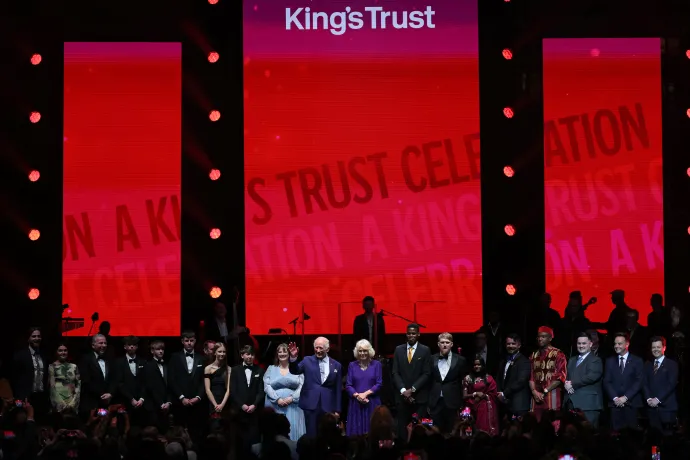
Remarks by The King at 'A King's Trust Celebration' at the Royal Albert Hall

You'll all make a huge difference to this country and many others.
18 May 2026
News

The King visits Bermuda

01 May 2026
The King in Bermuda

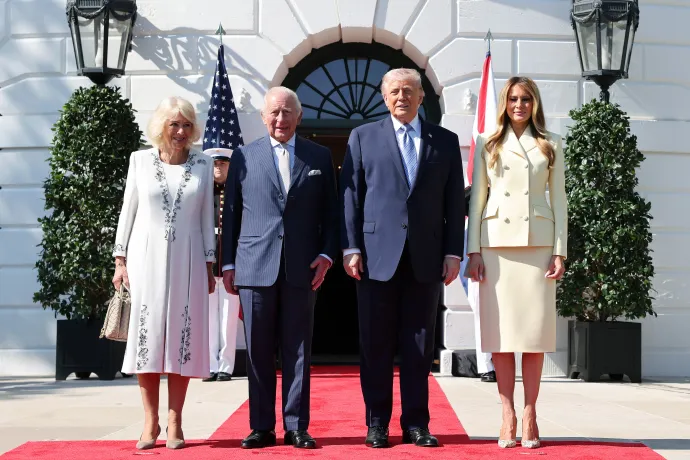
A speech by His Majesty The King at the White House State Dinner, Washington

Tonight, we are here to renew an indispensable alliance which has long been a cornerstone of prosperity and security for both British and American citizens. Our people have...

29 April 2026
News

Royal Maundy 2026

02 April 2026
Royal Maundy 2026
News

Commonwealth Day 2026

12 March 2026
Members of The Royal Family attend The Queen Elizabeth Prizes for Education

The King's Commonwealth Day Message 2026

Working together, we can ensure that the Commonwealth continues to stand as a force for good – grounded in community, committed to the kind of restorative sustainability that...
08 March 2026
Press release 03 March 2026

The King's Medal for Music 2024 & 2025

Read more
Press release 19 February 2026

A Statement from His Majesty The King

Read more
Press release 14 February 2026

The King’s Gold Medal for Poetry 2025

Read more

A message from The King on the death of Reverend Jesse Jackson

My wife and I were deeply saddened to hear of the death of the Reverend Jesse Jackson. We send our deepest sympathy to his family. I remember with great fondness meeting him...

18 February 2026

A message from The King ahead of a reception at Windsor Castle to celebrate carers

So to those who provide care - whether you wear a uniform or simply the clothes you felt able to pull on in the morning - please know that the great love you show in small...

12 February 2026

A message from The King, following the attack at Tumbler Ridge Secondary School in British Columbia

My wife and I were profoundly shocked and saddened to learn of the most dreadful attack at Tumbler Ridge Secondary School in British Columbia. We can only express our deepest...

11 February 2026
News

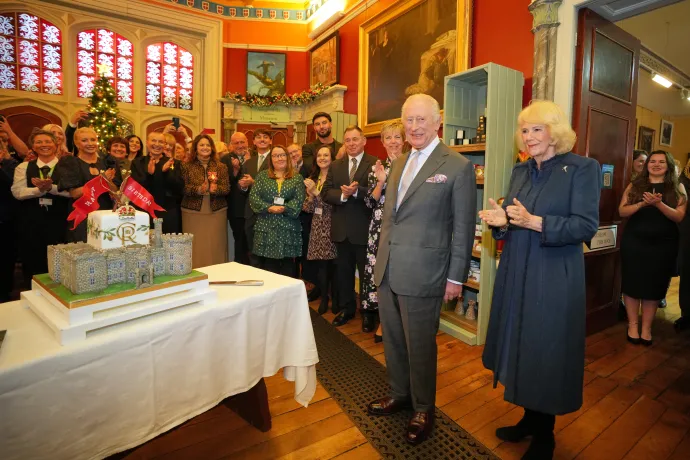
The King and Queen visit Dedham

12 February 2026
The King in Dedham

A speech by His Majesty The King at the Lord High Admiral’s Divisions Parade, Britannia Royal Naval College, Dartmouth

My own service taught me that leadership is not about rank; it is, and has always been, about character. It is about making sound decisions under pressure, holding firm to our...
19 December 2025

A message from The King in support of Stand Up To Cancer

Throughout my own cancer journey, I have been profoundly moved by what I can only call the 'community of care' that surrounds every cancer patient - the specialists, the...
12 December 2025

A message from The King to the people of South and Southeast Asia following devastating floods across the region.

My wife and I are deeply saddened to learn of the devastation caused by the terrible storms across South and Southeast Asia. We can only begin to imagine the scale of...

01 December 2025

A message from The King to the people of Hong Kong following the devastating fire in Tai Po.

My wife and I were greatly saddened to learn of the devastating fire in Tai Po and feel deeply for the people of Hong Kong at such a tragic time. Our most heartfelt thoughts...
28 November 2025

A message of condolence from His Majesty The King following the passing of Manfred Goldberg, Holocaust survivor and educator.

My wife and I were most deeply saddened to hear the news of Manfred Goldberg’s recent death and, together with everyone present, mourn his great loss in our hearts and souls...

07 November 2025

A message from The King to the people of Jamaica and all those across the Caribbean affected by Hurricane Melissa

My wife and I have been deeply concerned and profoundly saddened to see the catastrophic damage caused by the ferocity of Hurricane Melissa in Jamaica and across the Caribbean...
29 October 2025
News

State Visit to the Holy See

23 October 2025
The King and Queen with Pope Leo