A speech by The Prince of Wales at the BBC Radio 4 Food and Farming Awards, London
Published
All of you, ladies and gentlemen (real heroes and heroines as far as I am concerned) are creating food that has a story to tell; a story with a golden thread that directly connects the miracle of Nature’s richness with our own need for sustenance.
Secretary of State, Ladies and Gentlemen, I can’t tell you how encouraging it is that since the last time I attended the first of these Awards at St. James’s Palace ten years ago there has been a truly remarkable resurgence of what I can only call Britain’s ‘food culture’, with real excellence achieved by many producers in all parts of the country.
All of you, ladies and gentlemen (real heroes and heroines as far as I am concerned) are creating food that has a story to tell; a story with a golden thread that directly connects the miracle of Nature’s richness with our own need for sustenance.
These stories are all different – that is an important part of their appeal – but they often talk about a sense of place, about rare and native breeds of animal, or of fruit and vegetables; about timeless production methods and about unique presentation. But, above all, the essence of these stories is that at the end of the day they are actually about agri-culture, not about agri-industry.
We are told, of course, that agri-industry is the only way that we are going to be able to feed our burgeoning population and that there are no health benefits to Natural, organic, farming systems.
But perhaps we need to ask ourselves a few searching questions before accepting such a proposition…
For instance, if organically, or sustainably, produced food has no health benefits, then why are the water companies in this country spending something like £100 million pounds a year removing the pesticides and other chemicals from our water supply?
If our approach to industrially produced food (of which, incidentally, we waste some £10 billion worth in this country) is so sensible, then why are we seeing a dramatic increase in Type-2 Diabetes across the developed world?
If an industrialized approach to animal husbandry – which increasingly treats animals as machines in an ever more “efficient” system – carries no risk, then why are we seeing e-coli outbreaks in the United States from cattle raised on feedlots, fed on corn (when their stomachs were designed to cope with grass and leaves) and processed in ever-decreasing numbers of abattoirs as big as car factories?
If every technological innovation to increase the productive capacity of industrialized animals far beyond what Nature intended is considered safe, then why did the European Union decide to ban antibiotics as growth promoters in animal feed after they had been in use for fifty years?
And if, Ladies and Gentlemen, all the evidence shows that when children or, indeed, prisoners are fed proper, nutritious food, their behaviour and concentration both improve, why do we then ignore it or dismiss it as irrelevant?
The truth is that by treating food as an easy commodity, rather than a precious gift from Nature, we have started playing games with our health and with the environment, from which humanity can only stand to lose.
I do understand why the lure of industrially-produced food is so attractive to some people, all of whom I am convinced have the best of intentions. But I think it is very important that society recognizes the true cost, not just in environmental terms, but also in terms of its impact on our own health. If we lose the essential balance and disrupt the virtuous circle, then we risk incurring long-term and unmanageable costs.
These Awards, and The Food Programme itself, play a crucial role in making the case for sustainable farming and the production of real food. They help us understand the vitally important interactions between our food, our wellbeing and our society.
Finally Ladies and Gentlemen, if celebrating smaller scale, local and sustainable food production is considered to be an elitist position to take, then all I can say is that if we lose the knowledge, skills and traditions of our food culture, and we fail to give back to the soil and to Nature what we take from them, we will lose the wherewithal to look after ourselves and our planet.
Related content
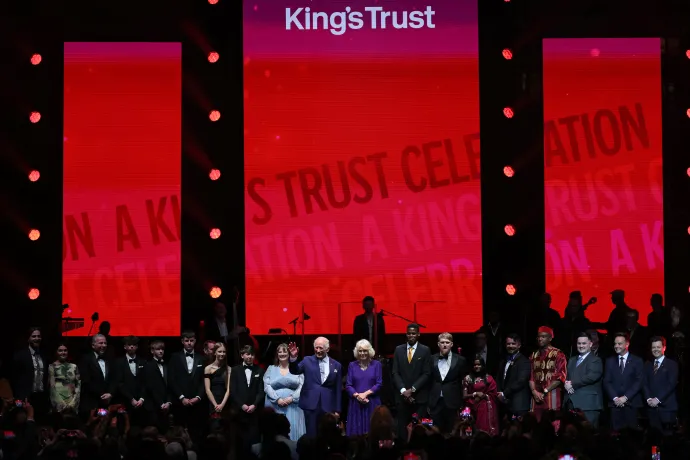
Remarks by The King at 'A King's Trust Celebration' at the Royal Albert Hall
You'll all make a huge difference to this country and many others.
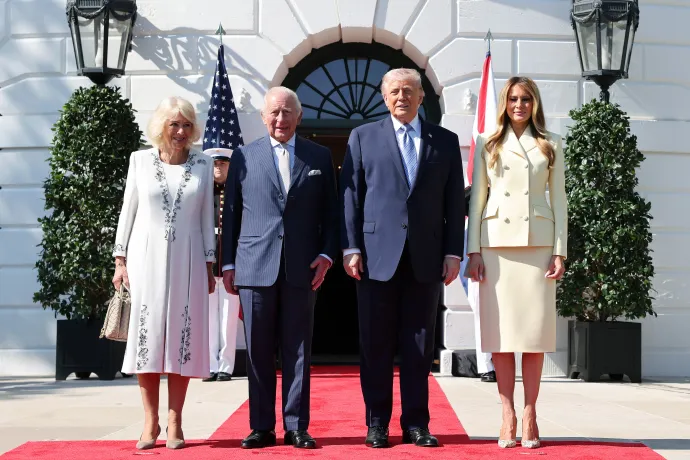
A speech by His Majesty The King at the White House State Dinner, Washington
Tonight, we are here to renew an indispensable alliance which has long been a cornerstone of prosperity and security for both British and American citizens. Our people have...
The King's Commonwealth Day Message 2026
Working together, we can ensure that the Commonwealth continues to stand as a force for good – grounded in community, committed to the kind of restorative sustainability that...
A message from The King on the death of Reverend Jesse Jackson
My wife and I were deeply saddened to hear of the death of the Reverend Jesse Jackson. We send our deepest sympathy to his family. I remember with great fondness meeting him...
A message from The King ahead of a reception at Windsor Castle to celebrate carers
So to those who provide care - whether you wear a uniform or simply the clothes you felt able to pull on in the morning - please know that the great love you show in small...
A message from The King, following the attack at Tumbler Ridge Secondary School in British Columbia
My wife and I were profoundly shocked and saddened to learn of the most dreadful attack at Tumbler Ridge Secondary School in British Columbia. We can only express our deepest...
Announcement of a State Visit by the President of the Federal Republic of Nigeria
A speech by His Majesty The King at the Lord High Admiral’s Divisions Parade, Britannia Royal Naval College, Dartmouth
My own service taught me that leadership is not about rank; it is, and has always been, about character. It is about making sound decisions under pressure, holding firm to our...
A message from The King in support of Stand Up To Cancer
Throughout my own cancer journey, I have been profoundly moved by what I can only call the 'community of care' that surrounds every cancer patient - the specialists, the...
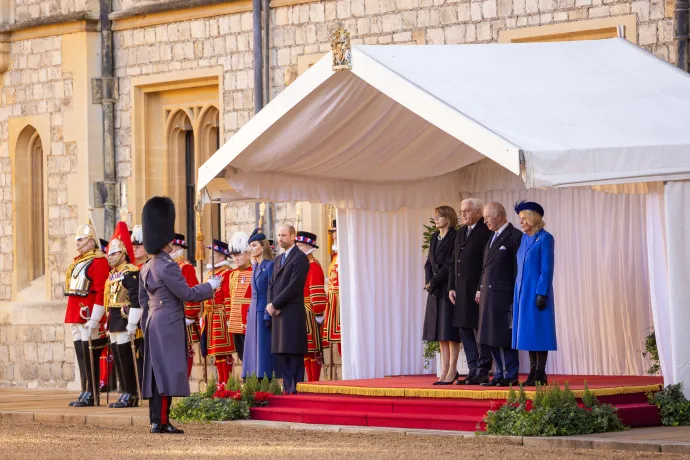
State Visit by The President of The Federal Republic of Germany and Ms. Büdenbender
03 December 2025
A message from The King to the people of South and Southeast Asia following devastating floods across the region.
My wife and I are deeply saddened to learn of the devastation caused by the terrible storms across South and Southeast Asia. We can only begin to imagine the scale of...
A message from The King to the people of Hong Kong following the devastating fire in Tai Po.
My wife and I were greatly saddened to learn of the devastating fire in Tai Po and feel deeply for the people of Hong Kong at such a tragic time. Our most heartfelt thoughts...
A message of condolence from His Majesty The King following the passing of Manfred Goldberg, Holocaust survivor and educator.
My wife and I were most deeply saddened to hear the news of Manfred Goldberg’s recent death and, together with everyone present, mourn his great loss in our hearts and souls...
A message from The King to the people of Jamaica and all those across the Caribbean affected by Hurricane Melissa
My wife and I have been deeply concerned and profoundly saddened to see the catastrophic damage caused by the ferocity of Hurricane Melissa in Jamaica and across the Caribbean...